i
This is general information, not insurance advice.Your insurer, policy documents or a licensed insurance professional can explain your actual coverage, limits and exclusions.
Start with the cause. A claim discussion is easier when you can explain what happened, when it was discovered and what you did to limit additional damage.
1
Record the apparent source
Photograph a failed pipe, appliance, roof opening or visible water entry point when safe. Avoid guessing about causes you cannot verify.
Need to organize claim evidence? Open our free insurance documentation forms: photo log, property inventory, expense receipts and insurer communication tracking. Each form works separately, keeps entries in your browser and can be printed or exported. They are not official insurance claim forms.
2
Document the affected areas
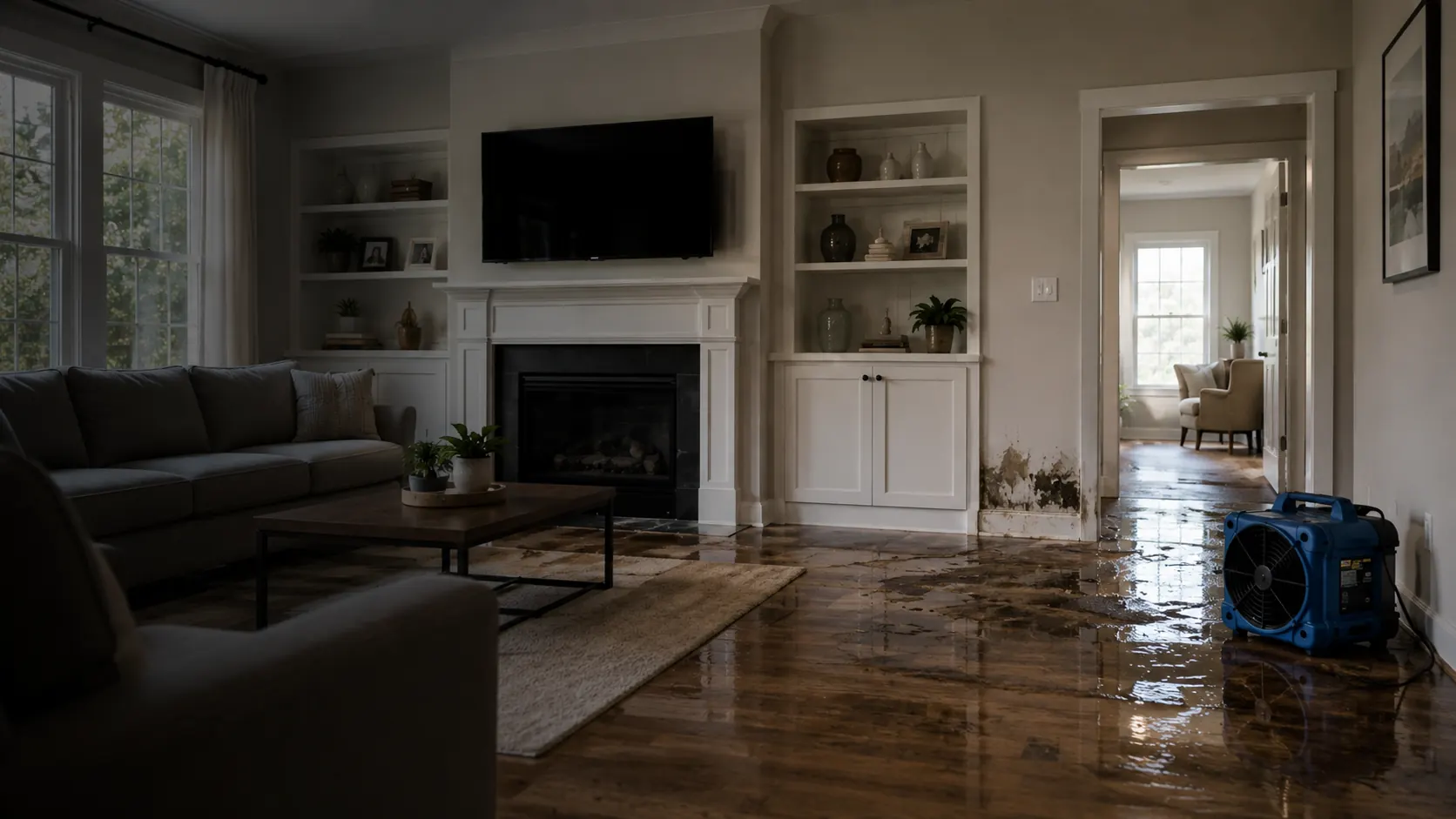
Take photos and video of rooms, finishes, belongings and water lines before major cleanup changes the scene.
3
Keep mitigation records
Save receipts, invoices, equipment records and notes about emergency steps taken to prevent additional damage.
4
Keep contractor scope separate from coverage
A contractor may recommend work and help document damage, but that does not guarantee the insurer will cover every item.
Useful questions for your insurer:- What information do you need from me now?
- Is there a claim number and preferred contact method?
- Are there documentation requirements before damaged materials are removed?
- How should emergency mitigation receipts be submitted?
- Who can explain any applicable limits or exclusions?
Coverage research and practical questions
Water damage insurance: five cause-of-loss questions to resolve
A wet floor does not identify a covered loss. The policy and the verified cause of damage matter more than the name of a cleanup service. Compare the descriptions below with the cause reported by your plumber, adjuster or other qualified professional—do not guess.
- Sudden broken supply pipe: Many policies address sudden and accidental water discharge, but the broken component itself, maintenance exclusions, deductibles and limits may be treated differently. NAIC explains this distinction.
- Slow leak or unresolved maintenance: A long-running leak may be treated differently from a sudden event. Provide dates and evidence without assuming that every leak is covered or excluded.
- Water from outside: Flooding and rising surface water generally need distinct flood coverage; a standard homeowners policy commonly does not provide it. CFPB flood coverage overview. If you are specifically dealing with water below ground level, read the basement flooding and NFIP basement limitations guide.
- Drain or sewer backup: Ask whether a backup endorsement exists; a plumbing backup and an exterior flood are not automatically the same insured peril.
- Roof-related intrusion: Storm damage, gradual wear and an interior leak can have different policy implications. Save evidence and ask the insurer to explain its coverage reasoning in writing.
Questions homeowners actually ask
Should I discard damaged furniture or wall material right away?
Document items first where safe. Some contaminated or unhealthy items may need removal before inspection. For an NFIP flood claim, the official claims checklist advises keeping damaged items until an adjuster sees them unless they are a health hazard or must be discarded by law. Follow your own insurer’s instructions and keep photos, item descriptions and receipts.
What documents will help my claim discussion?
Collect dates, wide and close-up photographs, the apparent source and its repair report, affected room and belongings inventory, mitigation invoices, equipment/monitoring notes, estimates, receipts and your insurer’s claim correspondence. Keep original records rather than rewriting a contractor’s findings.
Does a contractor estimate mean the insurer must pay that amount?
No. A provider estimates or performs work; the insurer evaluates policy language, cause, coverage, limits and deductibles. Request an itemized decision and ask about review or appeal processes when questions remain.
Is there always a 60-day claim deadline?
No. The NFIP references a 60-day proof-of-loss process, subject to applicable program terms or extensions; ordinary homeowners contracts have their own duties and timelines. Ask your insurer promptly about the exact deadline for your policy and loss.
Evidence and further reading: NAIC: burst-pipe water damage · CFPB: homeowners and flood insurance · NFIP: claims checklist · NFIP: start a claim
General U.S. educational guidance. Local conditions, professional findings, law and individual insurance terms may change the appropriate response.
Ready to make a decision?
If you need help comparing providers first, use the hiring guide. Otherwise choose the service category that matches the work you need.