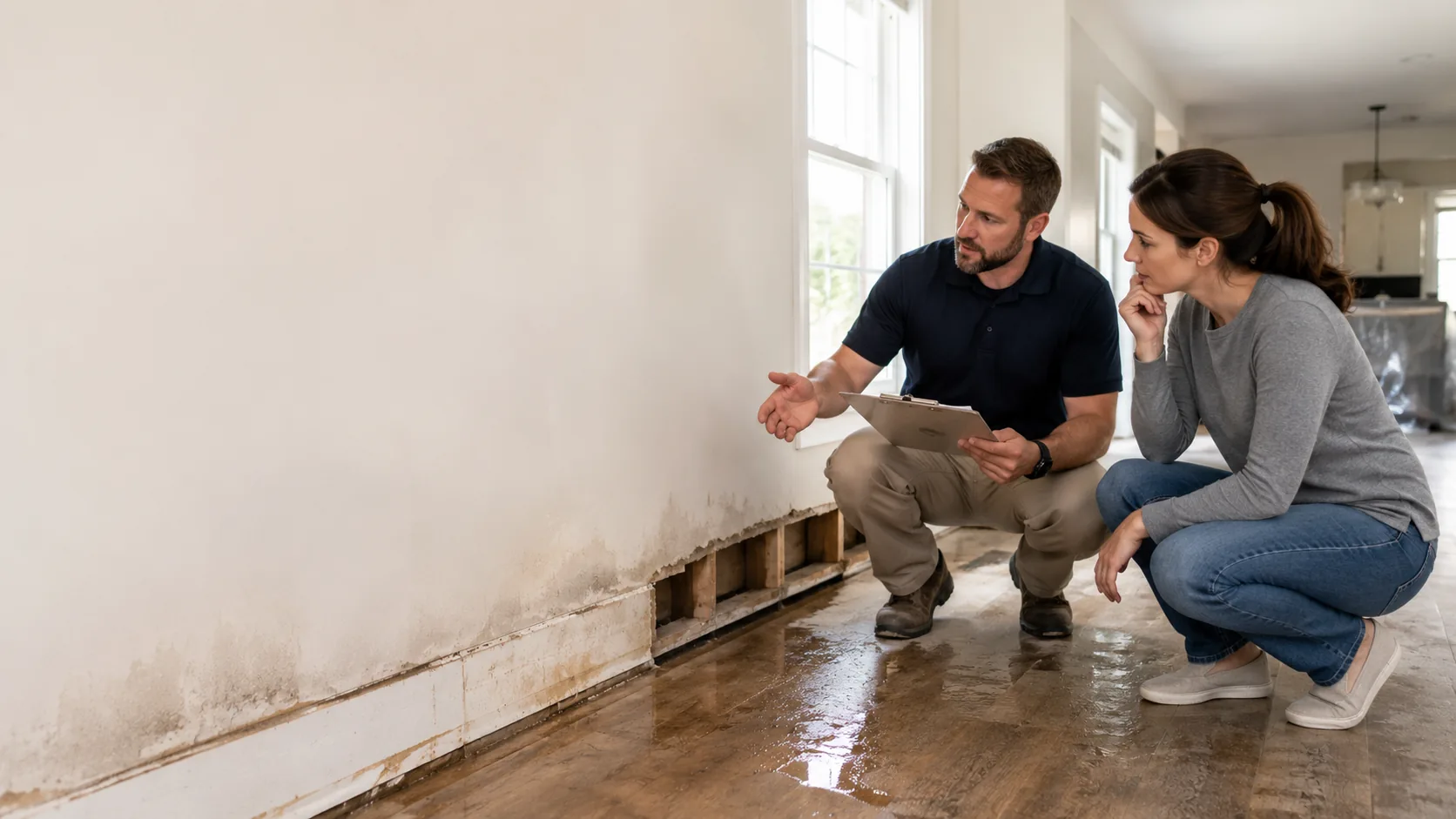
There is no single reliable national price for every water loss. Two homes with the same visible water level can have very different drying and repair needs.
Want a rough number for planning? Use our free water damage cleanup cost calculator by state to see an extraction-and-drying range based on affected area and published price data. It is a planning tool, not a contractor quote; hidden damage and rebuilding can change the cost.
1
Water source and contamination
Clean plumbing water, stormwater and sewage do not require the same cleanup approach. Higher-risk contamination can add labor, protection and material-removal requirements.
2
How far the water traveled
One wet room is different from water that reached multiple floors, wall cavities, insulation, cabinets or subflooring.
3
What can dry in place
Removing and replacing materials costs more than drying salvageable materials, but keeping unsalvageable materials can create later problems.
4
Drying time and equipment
Equipment quantity, monitoring visits and the time required to reach appropriate drying conditions can affect the final scope.
Hidden damage can change the scope. A first estimate may change if removal reveals wet insulation, damaged subflooring or other conditions that were not visible at the start.
Questions worth asking before you authorize work:- What work is included in the current scope?
- Which charges are estimates versus fixed rates?
- How are equipment days and monitoring visits billed?
- What could cause the scope to increase?
- How will I approve changes before additional work is performed?
Cost research: work stages and written quotes
How to compare the actual line items on a restoration estimate
The most useful comparison is scope against scope, rather than one total against another. The free state-adjusted extraction/drying calculator is a transparent national planning model—not a contractor bid, and its geographic proxy is not measured local restoration pricing.
- Emergency stabilization: Ask whether an urgent visit, extraction, protective measures or after-hours access is included or billed separately.
- Drying and monitoring: Identify equipment type, daily or flat rates, expected monitoring visits and what observations would justify additional equipment days.
- Material removal: Determine which drywall, carpet, insulation, flooring or belongings are proposed for removal and what site observations support that decision.
- Cleaning and containment: Contaminated water or suspected mold may change the protective measures, disposal and cleaning work required. Avoid equating a homeowner’s description with a certified water contamination category.
- Reconstruction: Confirm whether the price includes replacement drywall, finish carpentry, flooring, cabinets, plumbing and permits—or whether a separate repair proposal will follow.
Questions homeowners actually ask
Why is a 100-square-foot leak not automatically a $400–$600 invoice?
HomeGuide lists $4–$6 per square foot for certain clean-water extraction/drying situations. That illustration excludes minimum job charges, hidden wet materials, demolition, rebuilding and other services. A small job can have a minimum charge; the source type and scope need professional assessment.
Can a state multiplier give my exact local price?
No. Our calculator adjusts a published national benchmark using an official BEA other-services price index as a geographic planning proxy. BEA does not publish live water-restoration contractor bids, and a city, season or emergency call may differ substantially.
Should I accept an estimate with “equipment charges TBD”?
Ask the provider to explain the daily charging method, the initial assumed number of days, monitoring frequency, evidence for extensions and the written process for authorizing changes. You may need urgent stabilization before the full scope is known, but that is not a reason to leave pricing and authorization unexplained.
What if demolition exposes another wet wall or floor?
Ask for a revised written scope showing the new condition, photographs/measurements, added labor, materials and price. Keep the original estimate and approve changes according to the agreement.
Does filing an insurance claim guarantee the work is covered?
No. Policy coverage is separate from a provider’s recommended work. Keep restoration invoices itemized and read the insurance basics guide before assuming reimbursement.
Evidence and further reading: HomeGuide: 2026 water extraction/drying prices · IICRC: S500 professional restoration standard · NAIC: cause-of-loss coverage context
General U.S. educational guidance. Local conditions, professional findings, law and individual insurance terms may change the appropriate response.
Ready to make a decision?
If you still need another topic, use the guide library. If you are ready to act, choose the service category that matches the problem.