
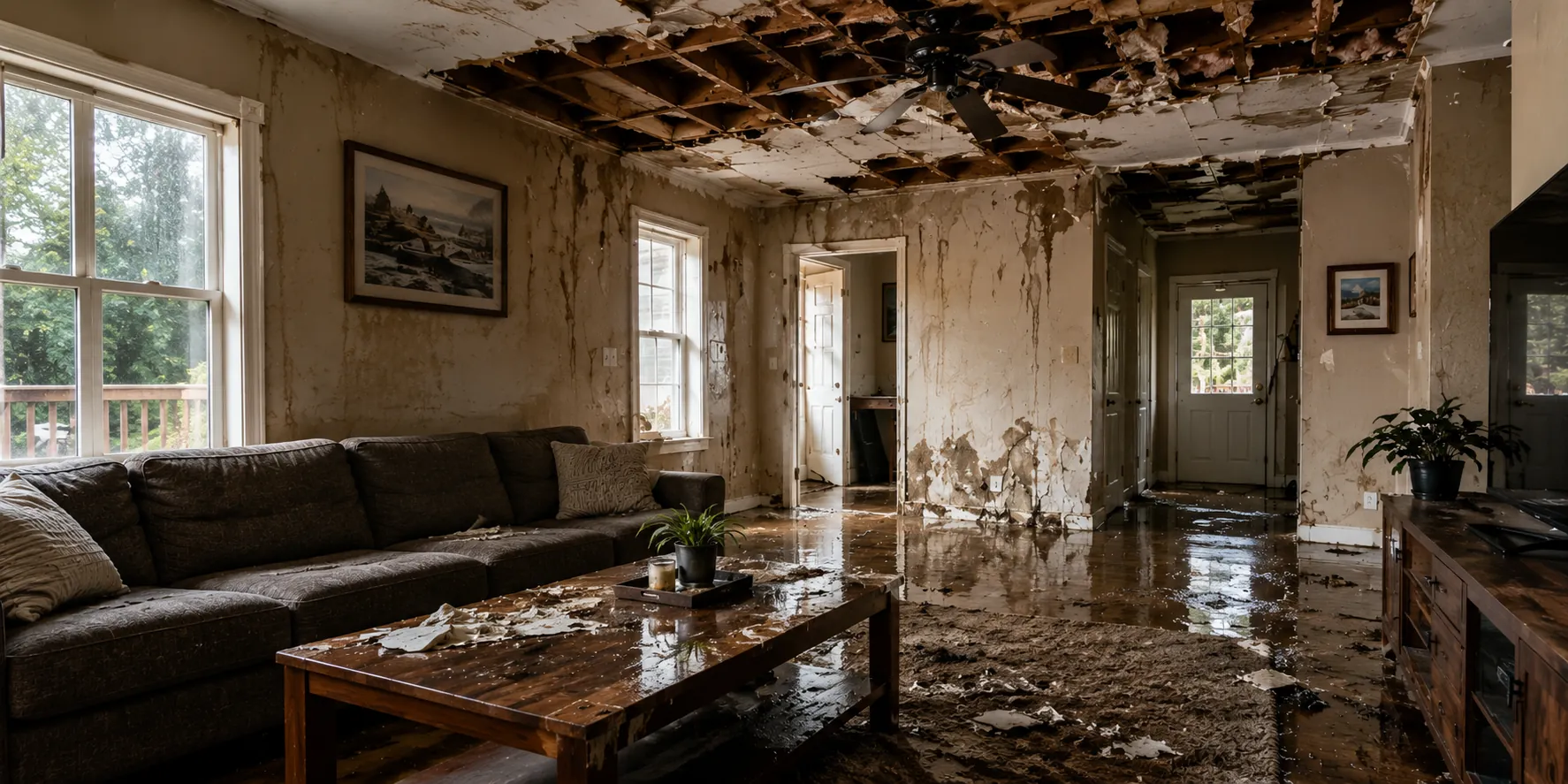
Do not enter standing water near electrical equipment, a visibly unstable room or ceiling, an area with sewage contamination, gas odor, smoke, fire or another immediate threat to people.
Control a water source only when you can reach it safely
If a known clean-water shutoff is safely accessible without crossing standing water or another hazard, stopping the flow can limit additional damage. Do not take risks to reach a valve.
If an active household pipe or plumbing fixture is the source and the area itself is safe, use the burst-pipe and plumbing guidance.
Treat electrical, gas and fire hazards as emergencies—not cleanup tasks
Do not operate wet electrical equipment, handle a panel while standing in water, investigate gas odors yourself or remain in an area with smoke or fire. Use the appropriate local emergency or utility service.
Keep people away from sewage and unstable materials
Water from sewage or outdoor flooding may contain contamination. Sagging ceilings, damaged floors and visibly compromised walls can also create physical hazards. Keep people and pets out until the situation can be evaluated safely.
Documentation, cost, insurance, drying and hiring decisions belong in the homeowner guides after the immediate hazard is controlled. Keeping those stages separate avoids mixing emergency safety with later restoration decisions.
Is the immediate hazard under control?
Move to the informational first-step checklist for documentation, water removal, drying and the next homeowner decisions.