
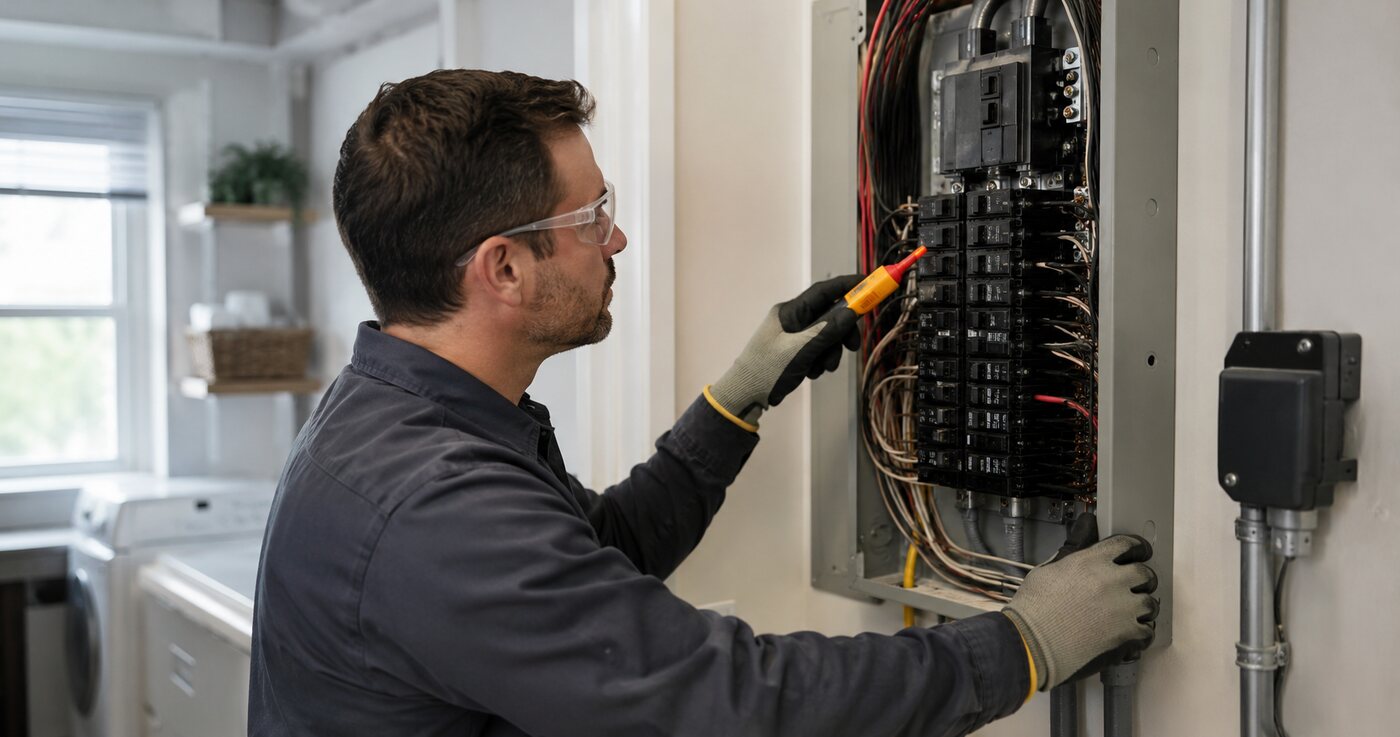
Note the warning signs and affected areas without opening panels or touching exposed wiring.
Treat serious electrical warning signs cautiously
If you notice smoke, sparking, burning odor, unusually hot electrical components, repeated breaker trips, damaged wiring, or water near energized equipment, keep away from the affected area and contact the appropriate local emergency, utility, or qualified electrical service.
Prepare the useful details
Note what stopped working, when the problem began, which rooms or circuits are affected, whether a breaker tripped, and whether any appliance, renovation, storm, leak, or outage occurred beforehand. Do not remove panel covers or touch exposed wiring.
Review the proposed scope
Ask what diagnosis, repair, replacement, panel work, permits, materials, labor, warranties, and follow-up are included. Request written pricing and confirm what could change the total before authorizing work.
- Whether the visit covers troubleshooting only or includes the repair.
- The number of affected circuits, outlets, fixtures, or panels.
- Access to wiring and whether finished walls or other materials must be opened.
- Parts, permits, inspections, panel capacity, and code-related work included in the scope.
Ask for written pricing that identifies the immediate repair, any optional improvements, and what could change the total.
Prepare for residential electrical service.
Use this guide to prepare for professional help with an electrical problem or planned residential project.
- Panels, breakers, outlets, switches, wiring and lighting
- Troubleshooting and residential electrical projects
- Have the affected rooms, fixtures, or panel details ready
Use this guide to prepare for professional electrical service while the call option is unavailable.
See available home servicesBefore authorizing electrical work
Confirm the diagnosis, written scope, price, permits, warranty terms, and the provider’s applicable licensing and insurance.