
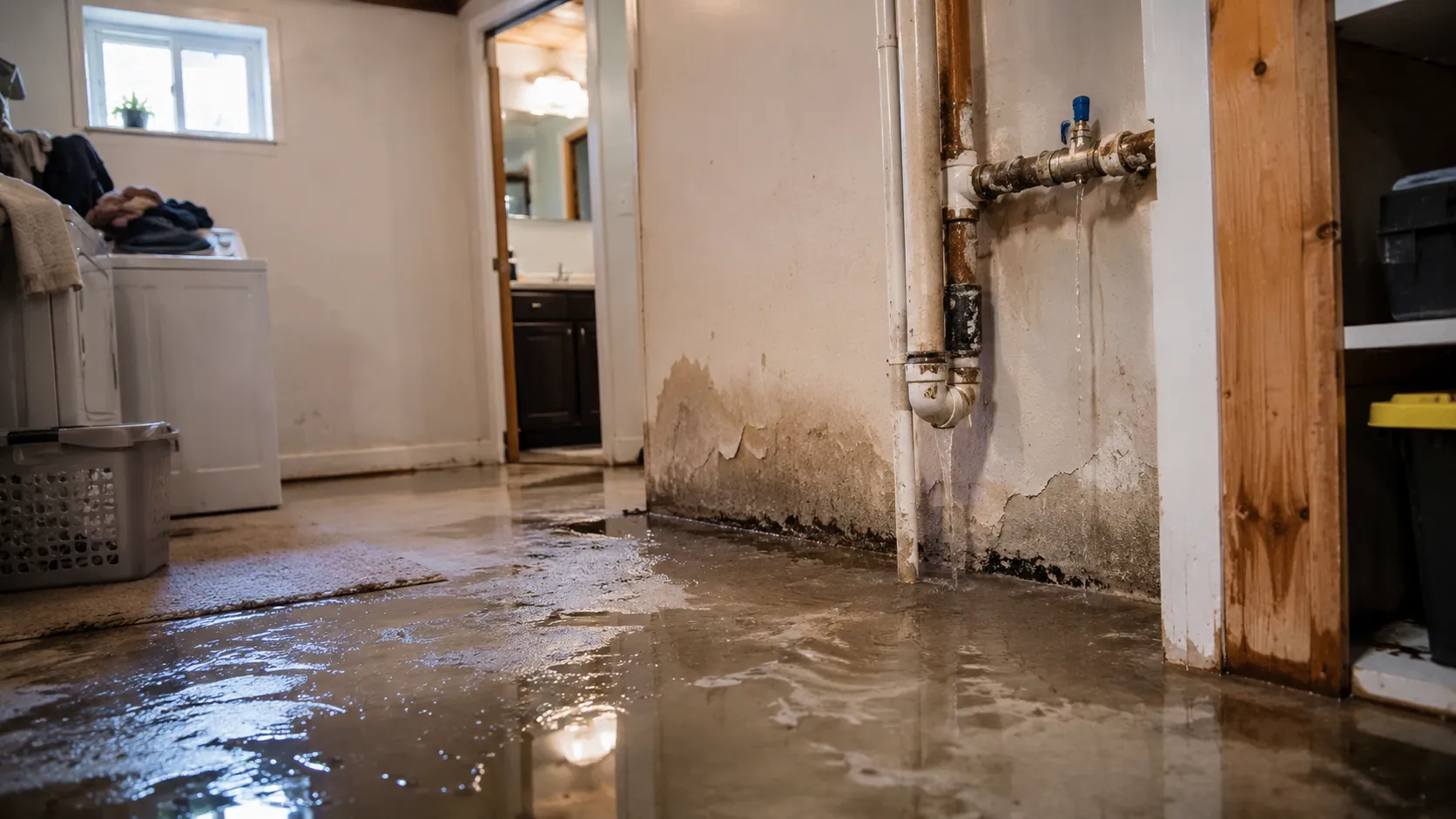
Do not enter standing water around outlets, appliances, extension cords or the electrical panel.
Shut off the appropriate valve
If you know the shutoff and can reach it without entering a hazard, stop the flow. If not, keep people away and get appropriate help.
Protect unaffected belongings
Move dry items away from the wet zone when it can be done safely, but avoid dragging contaminated or saturated items through clean rooms.
Remove standing water and start drying
Extraction is useful, but drying the structure is what prevents trapped moisture from becoming the next problem.
Create a simple damage record
Photograph the failed pipe, affected rooms and materials before major removal. Keep notes about when the leak was discovered and when the water was shut off.
- Locating and repairing the failed pipe or fitting.
- Opening and restoring walls, ceilings, cabinets, or flooring to reach the leak.
- Removing standing water and drying materials that can be saved.
- Replacing materials that cannot be dried or safely retained.
Ask which parts of the work are included, which require a separate company, and how additional damage will be approved if it is discovered.
- Water crossed multiple rooms or floors.
- Drywall, insulation, cabinets or subflooring are wet.
- The leak ran for an unknown length of time.
- You cannot verify that hidden materials are drying.
Stopping the leak and drying the damage are different jobs.
A plumber addresses the failed pipe or active source. A restoration professional may be useful when water has spread into walls, flooring, cabinets, insulation or multiple rooms.
- Confirm the water source is controlled.
- Document what became wet before removal.
- Ask how hidden moisture will be checked.
Describe the plumbing problem, where it is happening, and when it began.
Call (844) 723-0591Calls may connect you with an independent service provider.Need the full recovery sequence?
Use the first-step checklist from documentation through drying and repairs.