
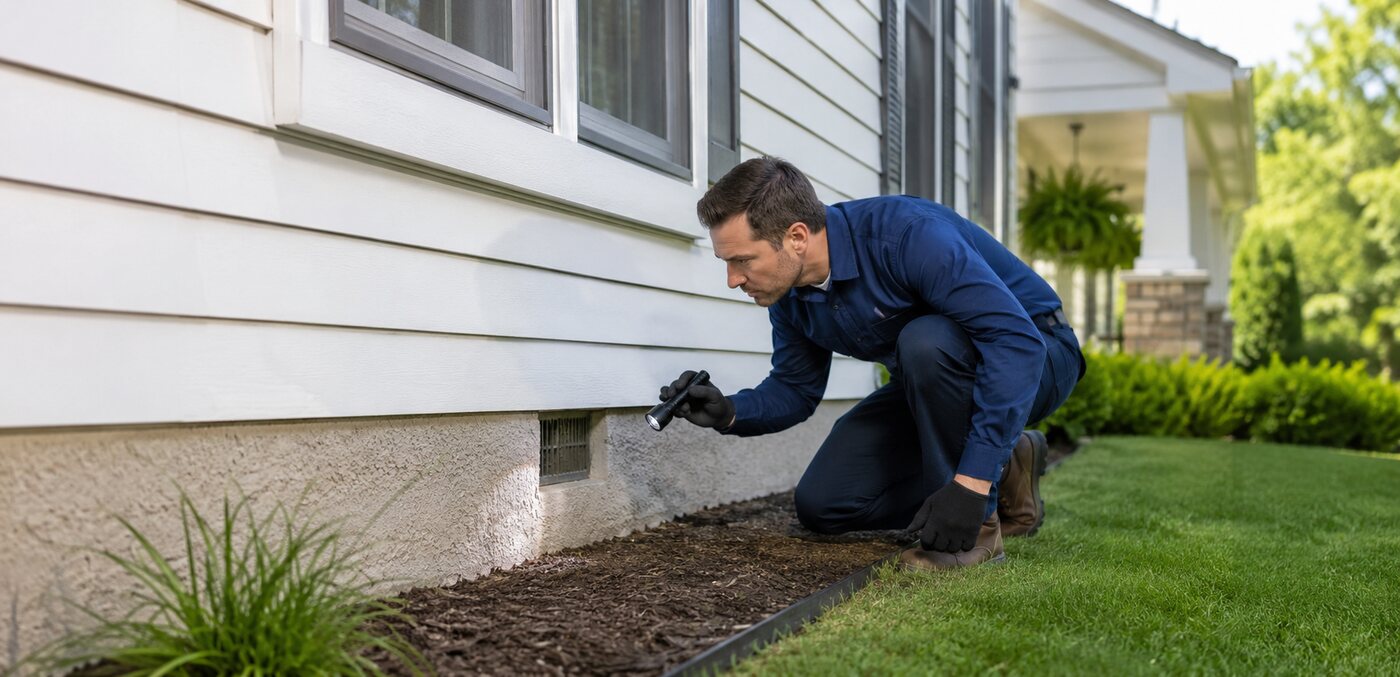
Common household pest problems include ants, spiders, cockroaches, crickets, mice, silverfish, clothes moths, centipedes, millipedes and termites. Rat-related pest-control service availability may vary, so confirm whether your specific rat issue can be handled when you call. For animals entering the home, use the separate wildlife-removal guide.
Document where you see activity
Note the room or exterior area, time of day, visible pests, droppings, damage, trails, or entry points. Photos can help a provider understand the problem before arrival.
Protect people and pets
Keep children and pets away from suspected nests, droppings, damaged food, chemicals, and areas where treatment may be needed. Do not mix pesticides or use a product contrary to its label.
Review the proposed service scope
Ask which pest is being targeted, what inspection and treatment are included, whether preparation is required, how follow-up works, and what conditions could change the price.
Get ready for a pest-control visit.
Gather the details that will help explain the problem and where activity is occurring.
- Common household pest concerns
- Residential homes and apartments
- Photos and a record of where activity appears
Describe the pest, where activity is occurring, and any visible damage or treatments already attempted.
Call (866) 227-3850 Calls may connect you with an independent service provider.Before authorizing work
Confirm the inspection findings, treatment plan, written price, follow-up terms, and applicable licensing and insurance.