
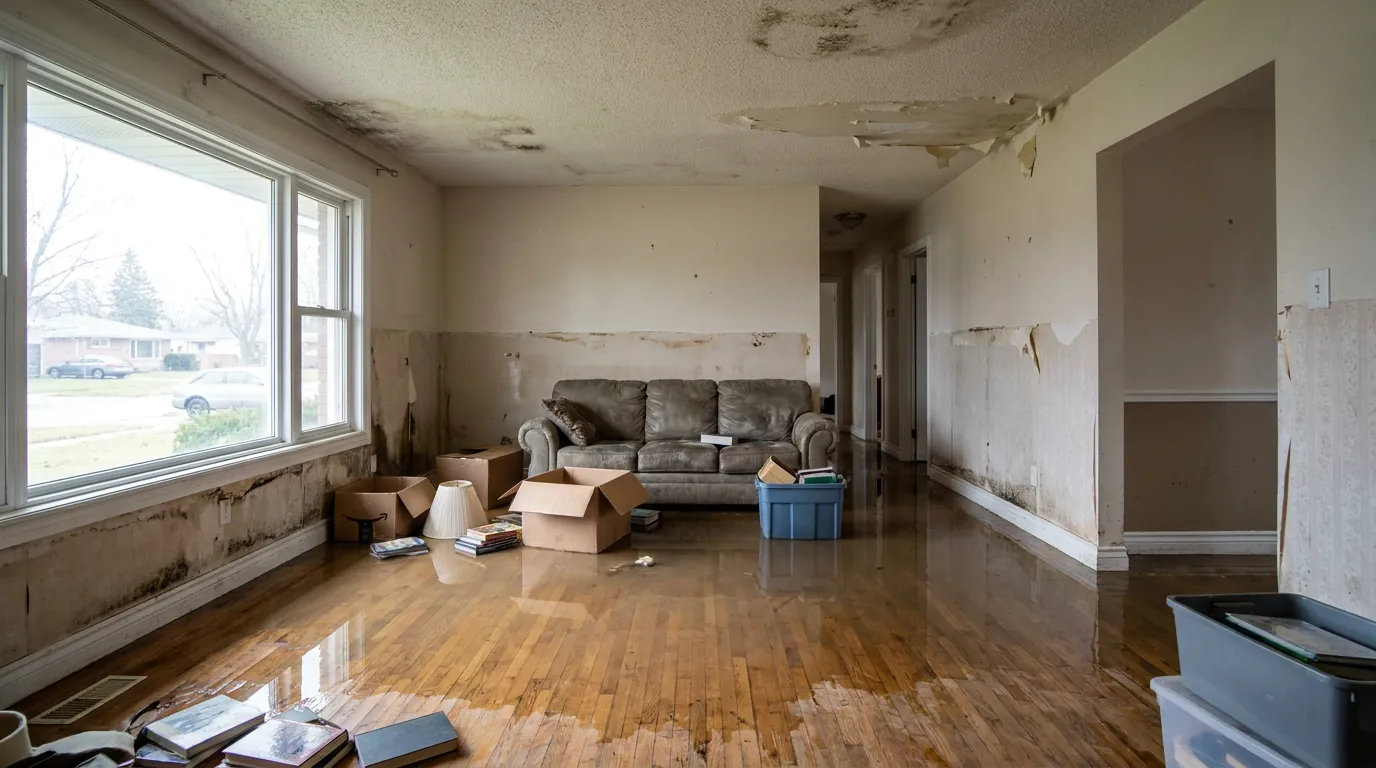
Not sure what to do next? Use our free interactive water damage next-step planner to get a prioritized checklist based on your situation. It cannot certify that the area is safe.
Use a simple order: protect people → stop additional water when safe → document the loss → remove standing water → dry the affected materials → decide what kind of help or information you need next.
If water may be touching electrical equipment, sewage is involved, the structure appears unstable, there is a gas or fire hazard, or anyone may be in immediate danger, leave the affected area and contact the appropriate local emergency or utility service.
Check for danger before cleanup
Look for electrical, structural and contaminated-water risks before moving belongings or walking through wet areas. Personal safety comes before protecting property.
Stop additional water when it is safe
If the source is a controllable clean-water plumbing leak and you can safely reach the appropriate shutoff, stopping the flow can limit additional damage. Do not enter water or cross an electrical or structural hazard to reach a valve.
If a pipe or plumbing fixture is still leaking, see the burst-pipe and plumbing steps.
Create a clear record
Take wide photos or video of each affected room, then closer images of wet materials, belongings and the apparent source when safe. Note when you discovered the problem and which areas were affected.
Remove standing water and begin drying
Small, clean-water spills may be manageable with ordinary household cleanup. Larger losses, contaminated water, or moisture inside walls, floors, insulation or cabinets can require more extensive extraction and structural drying.
Learn more about the process in the water extraction and drying guide.
- Browse the full guide library — choose by the question you need answered.
- Insurance and documentation — what to record and what to ask your insurer.
- Restoration cost — what commonly changes the scope and price.
- How long water damage restoration takes — estimated cleanup and drying time for minor, moderate and severe damage.
- Choosing a restoration company — compare scope, drying plans and written terms.
- Prepare for a service call — organize facts, photos and questions.
Need the next specific step after immediate safety? If water is coming through the ceiling, follow the ceiling-specific warning signs. If possessions were soaked, use the belongings triage guide before deciding what to retain.
Winter water-loss situation? See frozen-pipe safety and prevention before a supply line thaws or a hidden leak becomes visible.
Related homeowner questions: leaking water heater guidance. These pages cover distinct evidence, safety or provider-scope decisions.
Ready to make a decision?
Go to the service options and choose the category that actually matches the problem in your home.