
If there is an electrical, structural, gas, fire, sewage or personal-safety hazard, leave the affected area and contact the appropriate local emergency or utility service.
- Can you explain stabilization separately from reconstruction?
- How will you determine which areas and materials are actually wet?
- What equipment do you expect to use and how will drying progress be checked?
- Will I receive a written scope or estimate?
- How are equipment, demolition, disposal and after-hours charges handled?
- How are changes approved if hidden damage is discovered?
Look for a clear drying plan
Removing visible water is only one step. Ask how the company will identify moisture under flooring, behind walls or inside cabinets and how it will decide when drying is complete.
Get important details in writing
Urgent work can begin before every hidden condition is known, but rates, authorizations and scope changes should still be explained clearly.
Separate insurance help from coverage promises
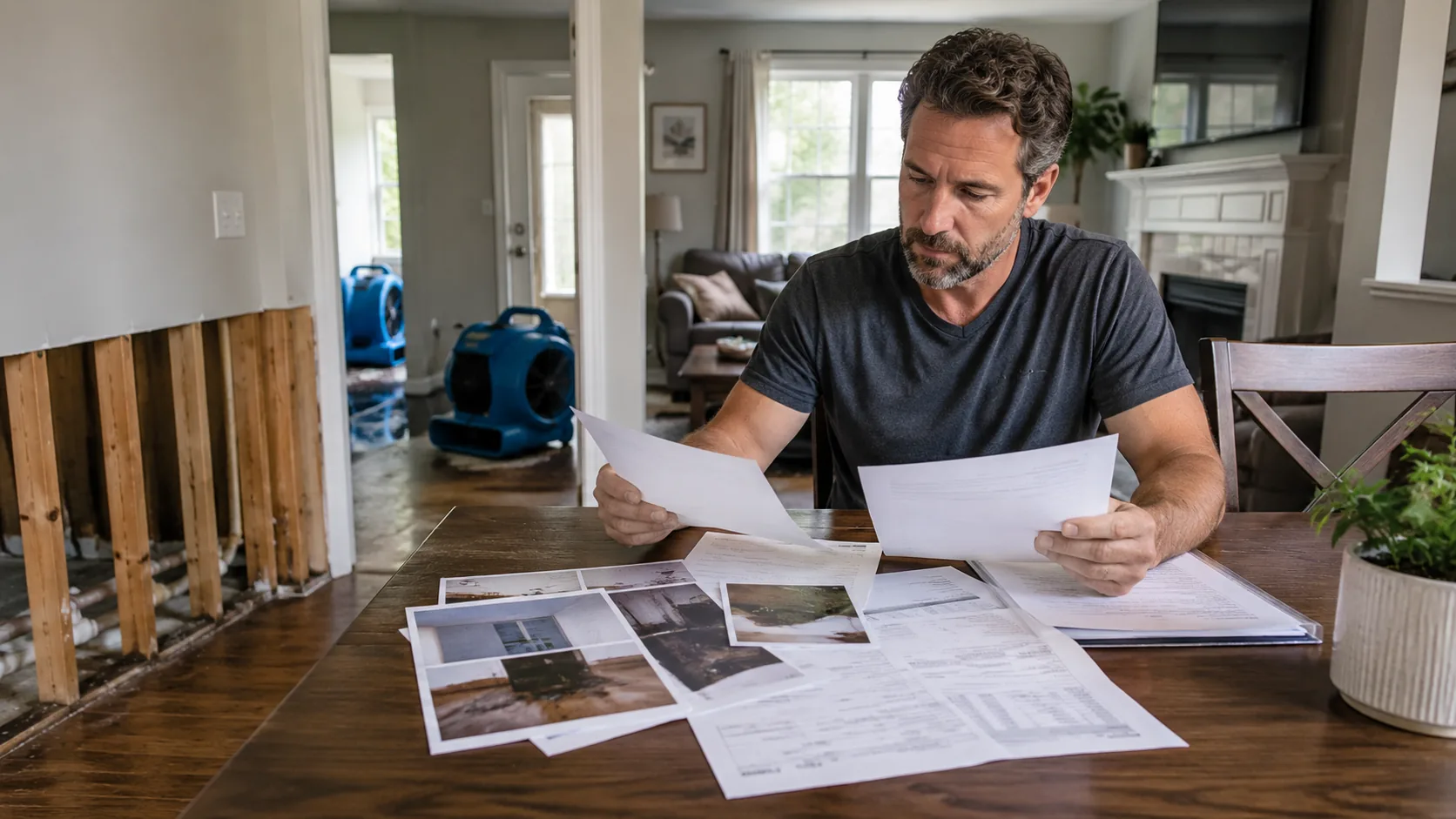
A restoration company may help document the loss, but the policy and insurer determine coverage. Contractor recommendations do not automatically equal covered charges.
- Pressure to sign documents you have not been allowed to read.
- Pricing that cannot be explained in plain language.
- Promises about insurance coverage the contractor cannot control.
- No clear explanation of moisture assessment or drying progress.
- Requests for unusual or difficult-to-document payment methods.
Ready to make a decision?
If you still need another topic, use the guide library. If you are ready to act, choose the service category that matches the problem.