
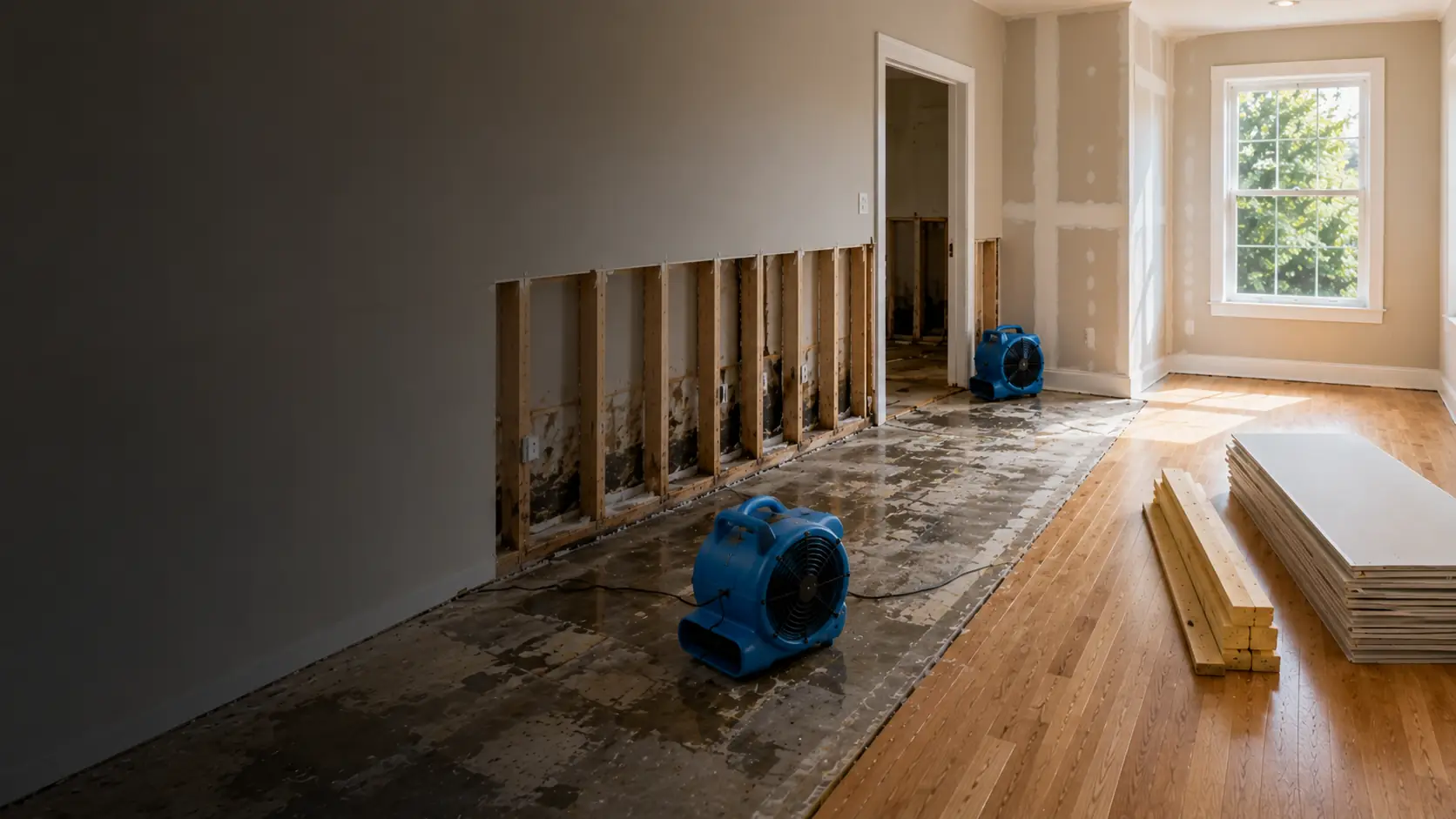
There is no honest single-day answer for every loss. Think in stages rather than expecting the whole restoration to move at the speed of the first water-removal visit.
Stabilization and water removal
Active water is controlled when possible, standing water is removed and the affected area is evaluated for safety and moisture spread.
Structural drying
Drying can take longer because moisture must leave flooring, drywall, framing, cabinets and other materials—not just disappear from the visible surface.
Material removal when needed
Contaminated, damaged or unsalvageable materials may need removal before the space can be cleaned, dried and prepared for repairs.
Reconstruction and finishes
Drywall, flooring, trim, cabinets and paint usually come after the moisture problem is resolved. Availability of materials and trades can add time.
- Water reached hidden cavities or multiple floors.
- Materials stayed wet for a long time before discovery.
- Sewage or other contamination is involved.
- Large areas need demolition or reconstruction.
- Drying progress is slower than expected.
- Insurance or scope approvals delay non-emergency repairs.
Ready to make a decision?
If you still need help comparing a proposed schedule, use the hiring guide. Otherwise choose the service category that matches the work you need.