
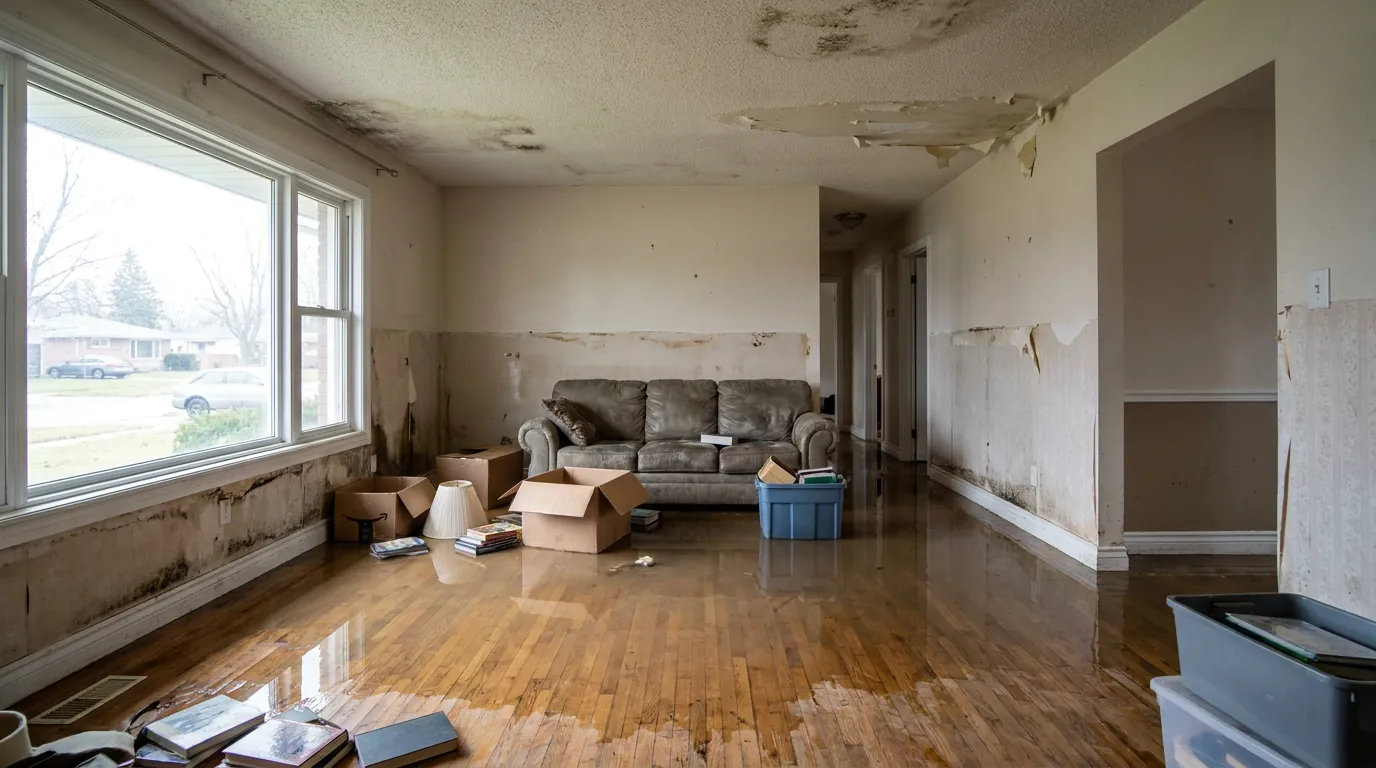
Outdoor floodwater, sewage, damaged electrical systems, unstable floors and ceiling debris can change the situation. When contamination or electrical hazards are uncertain, request qualified help rather than sorting items inside the affected space.
The first decision is not “keep or throw away.” Ask where the water came from, whether the item is porous, and whether it can be cleaned and dried safely. A solid, washable object and a saturated upholstered couch are not equivalent. Even apparently dry possessions may have wet padding, backing or internal components.
EPA explains that water-damaged absorbent materials can become difficult to clean once mold or contamination is involved. For a broad overview, see EPA's mold cleanup guidance and its post-flood indoor-air guidance.
Choose the right assessment route—not just a disposal pile
Potentially cleanable: Hard, nonporous items such as glass or metal objects may be candidates for cleaning when they are safe to handle and the contamination circumstances allow. Electronic devices are a separate exception: do not plug in a wet appliance to test it.
Ask a specialist: Valuable wood furniture, heirloom textiles, books, printed photographs and documents may have conservation options, but methods differ sharply by material. Do not experiment on irreplaceable originals.
Removal or replacement more likely: Severely contaminated or moldy absorbent materials, swollen fiberboard, saturated porous padding and objects that cannot be cleaned throughout may not be reasonable to keep. Ask a qualified professional when loss type or hidden layers are uncertain.
Belongings salvage matrix: questions to ask by material
This is an original homeowner triage aid, not a certificate that something is sanitary or restorable. The water source, duration, hidden layers, occupant vulnerabilities and specialist findings can change the answer.
- Glass, metal and many sealed hard objects: Were they exposed to sewage, chemicals or merely an indoor supply leak? Are seams, internal voids or electrical parts involved? Ask what appropriate cleaning is needed before reuse.
- Upholstered furniture, mattresses and cushions: Can every porous layer be safely cleaned and dried, or is water trapped beneath fabric? Outdoor floodwater and sewage create particular contamination concerns; do not assume a surface wipe is sufficient.
- Solid wood, veneers and particleboard: Is there visible swelling, delamination, loosened joints or mold? A restorer may evaluate valuable solid-wood objects, while damaged composite boards can be less salvageable.
- Rugs, carpet and padding: Was this clean water or a suspected contaminated source? Is the pad wet, and can the backing and subfloor be assessed? Use the specific wet flooring decision guide rather than a one-size-fits-all instruction.
- Books, archives and photographs: Which pieces are irreplaceable? The National Park Service has separate guidance on wet photographs and wet books; consult a conservator for valuable or delicate pieces.
- Electrical appliances and electronics: Do not switch them on while wet or simply plug them in to check. Ask a qualified technician whether safe inspection and repair are appropriate; document model numbers without approaching live electrical hazards.
EPA's water-damaged material guidance addresses drying and cleaning differences. Its detailed material table was written for schools/commercial buildings, so apply its distinctions cautiously rather than as universal household disposal rules.
Document what was damaged before conditions change
Take safe overall photos of the room and close-ups of visible damage. For each affected item, record the name, room, approximate age, quantity, make/model if visible and any proof of purchase. Photograph or note identifying information without exposing private account details publicly. Record whether the item was cleaned, stored for inspection or disposed of for a health or safety reason.
The RHH damaged-property inventory keeps records locally in your browser and supports print/CSV export. It is not an insurer's official proof of loss and does not establish replacement value or coverage. The NFIP documentation guide explains why photographs, an inventory and supporting receipts are valuable in a flood claim; ordinary homeowners policies may have different requirements.
Ask your insurer how to document hazardous items that must be discarded before an adjuster arrives. Do not retain unsafe materials solely for a future inspection.
Prioritize items that would be difficult to replace
Make a separate list of family photos, essential records, unique artwork and heirloom textiles. Avoid stacking wet photographs or forcing stuck pages apart. Conservation guidance from the National Park Service shows that careful material-specific handling matters; a book needs different treatment from a photograph or antique textile.
Documents can contain sensitive information. Protect originals and scans, and consult the insurer or an appropriately trained conservator before undertaking experimental treatment on irreplaceable materials.
Questions homeowners ask about damaged belongings
Can I save a sofa that was soaked by a leaking pipe?
Not safely based on appearance alone. An intact surface says little about internal cushioning, wood framing, backing or the actual water source. Ask a qualified restorer how all layers would be evaluated and whether cleaning and complete drying are feasible.
Can I use a flooded television once the outside dries?
Do not power up a wet or flood-exposed electrical appliance just to test it. Hidden electrical damage or contamination may remain. Seek qualified electrical/technical assessment, and check with the insurer about documentation before disposal.
Do I have to keep destroyed belongings until an adjuster comes?
Follow the specific insurer's instructions whenever possible, but never compromise health or safety. Photograph affected items safely, preserve descriptions and receipts, and document why something hazardous had to be removed. NFIP-specific retention rules should not be applied automatically to every policy.
Will the insurance company pay the price of a new replacement?
Not necessarily. Actual-cash-value, replacement-cost and special-limit terms vary by policy. Your own item list or estimated total is useful evidence but not the amount the insurer promises to pay. Read the coverage basics and obtain an insurer explanation in writing.
What if my belongings smell musty but no mold is visible?
Moisture or mold can be concealed in porous layers. Avoid exposing vulnerable occupants or using aggressive cleaning chemicals as a shortcut; investigate the moisture source and consider appropriate professional assessment. EPA's mold and moisture guide explains this distinction.
EPA: Mold Cleanup · NFIP: Document Damage · NPS: Wet Books · NPS: Wet Photos
Reviewed November 22, 2026. General U.S. homeowner education only; not a sanitation certification, property appraisal, insurer determination or conservator inspection.
Need to record damaged items now?
Organize photos, receipts and an item-by-item inventory locally without uploading personal claim data.