
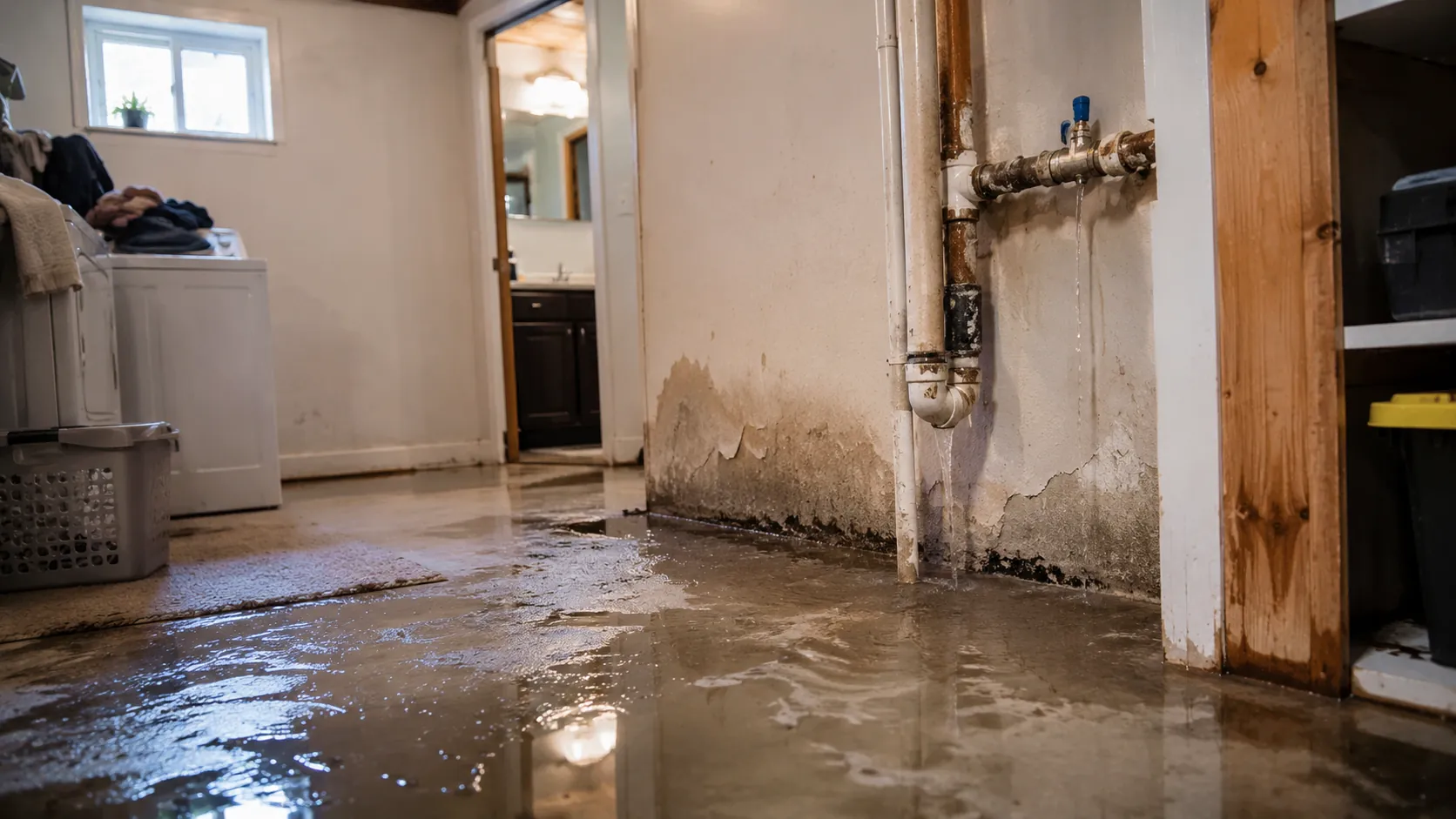
Do not handle submerged electrical equipment or gas controls. If you smell gas, leave the area and follow your utility's emergency instructions; do not operate switches. If a heater or adjacent power equipment is in standing water, keep clear and request qualified assistance.
Water near a water heater does not automatically mean the storage tank has failed. A supply connection, valve, relief discharge, drain pan, nearby appliance, condensate line or tank body may be involved. A gas or electric water heater also adds hazards that should not be approached as an ordinary floor spill.
If water is near electrical equipment or you smell gas, keep clear and seek appropriate urgent help. Otherwise, record the visible leak location from a safe distance for the service provider.
Observe the possible source without dismantling equipment
Note possible leak locations from a safe distance without dismantling equipment.
- Supply or outlet connections: From a safe position, note whether water appears at a joint or line rather than the tank shell. A plumber can determine whether a fitting can be repaired safely.
- Tank body or seam: Persistent leakage from the body may indicate a different repair decision than a loose external fitting. Do not attempt welding or sealing a tank.
- Relief valve or discharge tube: A discharge could involve pressure or temperature control. Do not plug, cap or modify safety discharge piping; contact a qualified professional.
- Condensation or nearby water: Some high-efficiency and heat-pump systems have condensate drainage. A wet floor may also originate from another appliance or wall. Trace observations rather than guessing.
- Floor and surrounding materials: Document affected baseboards, subfloor, nearby storage and cabinet materials. Removing the leak source does not by itself verify that absorbent materials are dry.
- Drain pan and alarms: ENERGY STAR notes properly located drain pans and leak detection can reduce future property impacts. Preventive devices do not make a damaged heater safe to operate.
Plan the response in two work stages
Have a qualified plumbing/HVAC professional identify and fix the source, then evaluate the moisture that spread into flooring, drywall or nearby rooms. Request separate written scopes and keep photographs, model number and receipts. If the heater was flooded, its gas/electrical components may require replacement or specialist assessment.
Questions about a leaking water heater
Does water under the heater prove the tank cracked?
No. Connections, discharge, condensation or adjacent water sources may be responsible. A professional source inspection is needed.
Should I plug the dripping relief tube?
Never. Safety relief components should not be capped or bypassed. Seek professional service.
Can I switch an electric heater back on after water exposure?
Not without qualified evaluation. Wet electrical equipment presents a serious hazard.
Will a plumber dry the nearby drywall?
Not automatically. Confirm what the plumbing repair covers and whether a separate structural drying assessment is required.
Can a leak alarm prevent every water-heater loss?
No. Alarms and drain pans may reduce damage but cannot fix worn tanks, valves, plumbing or unsafe installations.
Water-heater safety and repair references
Check the cited sources and applicable local safety requirements before acting.
Published November 22, 2026; text updated November 23, 2026.
If water has spread beyond the heater
If surrounding materials are wet, follow the water-damage first steps.