
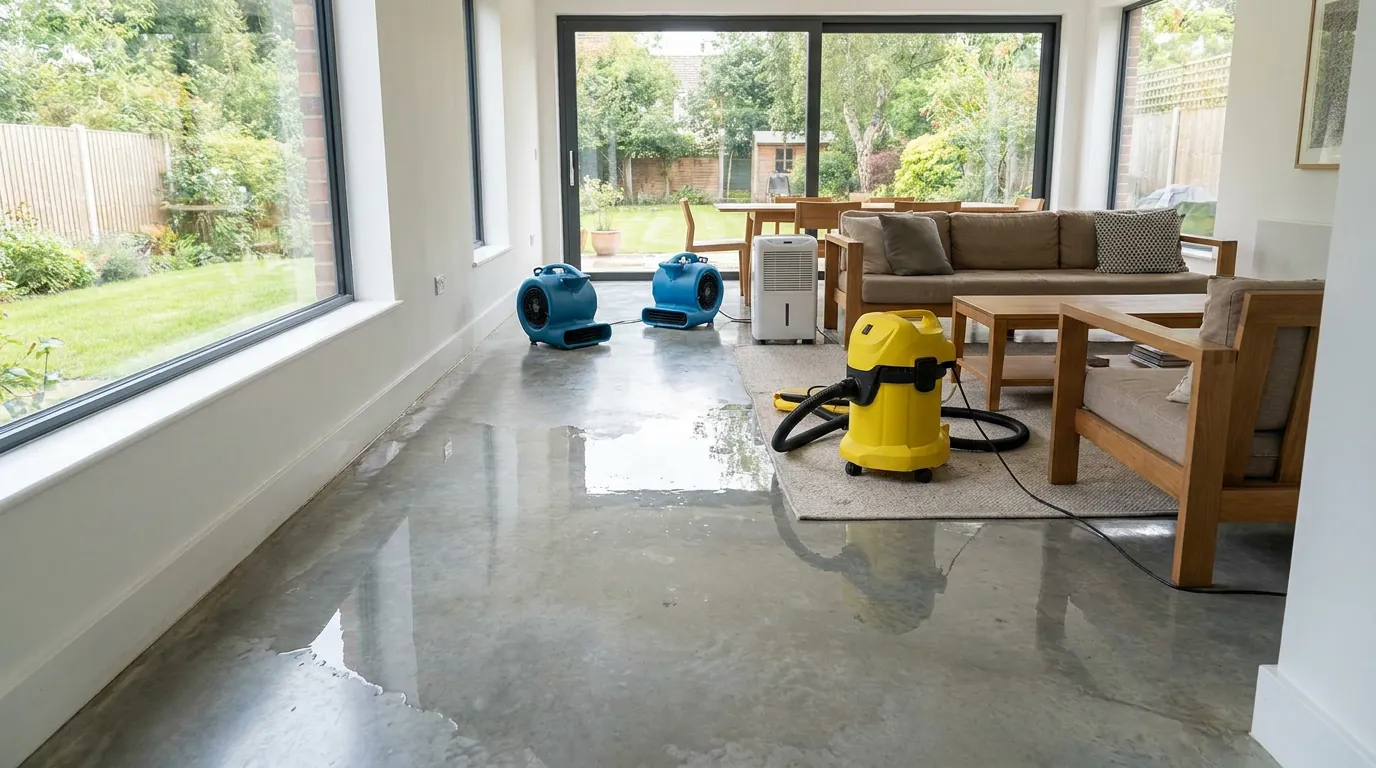
Extraction is one stage. Pumps and vacuums can remove visible water, but materials around and below that water may still hold significant moisture.
1
Remove standing water
Extraction reduces the amount of water in the home and allows the drying process to begin.
3
Dry the materials, not just the air
Air movement and dehumidification help, but the real goal is getting affected materials back to an appropriate moisture condition before repairs.
4
Clean, remove and repair as needed
Some materials can dry and remain; others may need cleaning or removal depending on contamination, damage and how long they stayed wet.
Useful questions before agreeing to a restoration scope:
- What areas were checked for hidden moisture?
- Which materials are expected to dry in place?
- Which materials need removal, and why?
- How will drying progress be checked?
- What is included now, and what could change the price later?
Comparing restoration companies?
Use our hiring guide to compare scope, drying plans and documentation.