
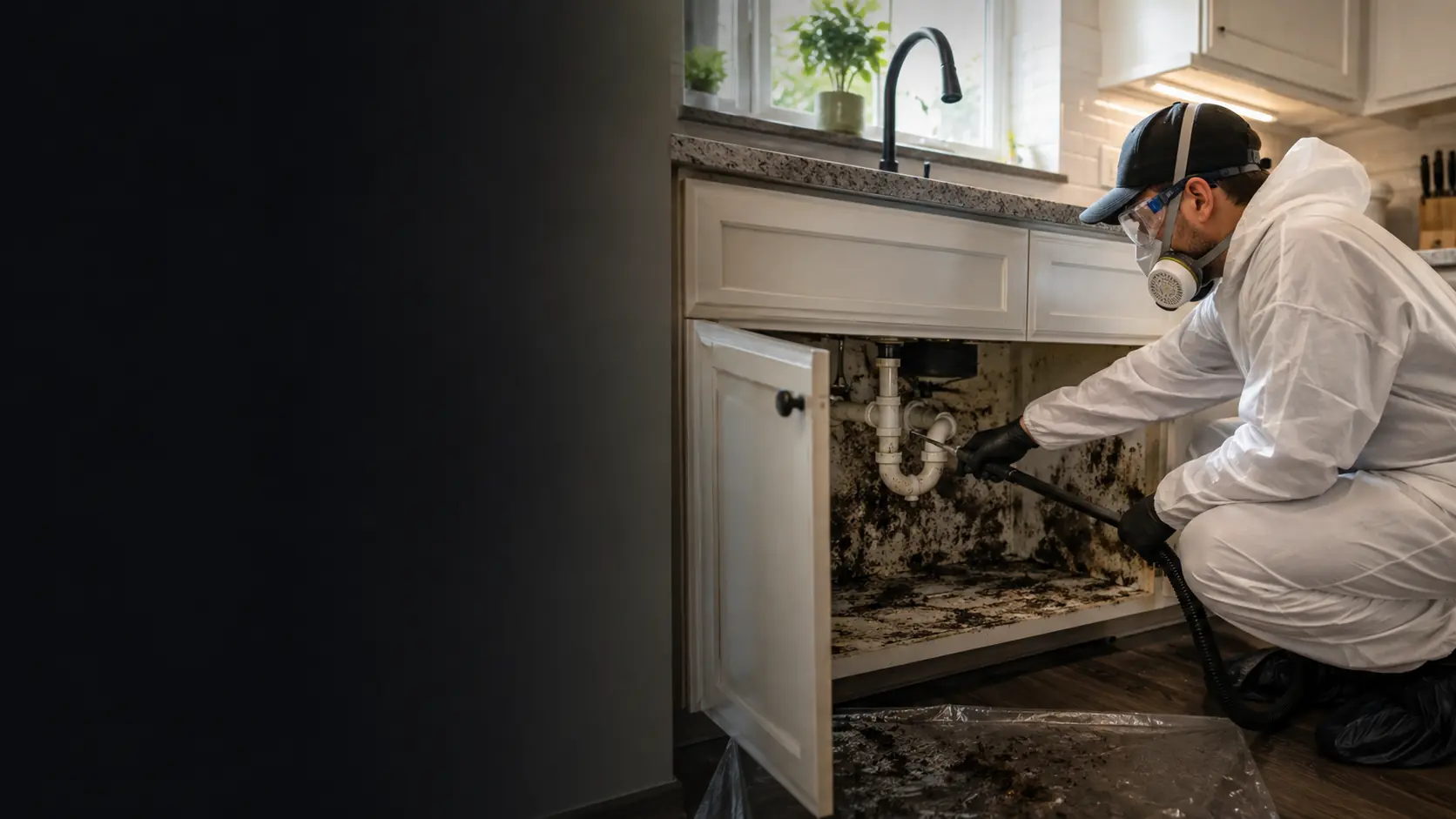
This page is for a new mold-removal or remediation need. It is intended for homeowners dealing with visible, recurring or moisture-related mold concerns—not billing, customer-service or follow-up questions for a company you already hired.
If water is still entering the home, electrical equipment is affected, sewage is involved, or the structure appears unsafe, deal with the immediate hazard before focusing on mold service.
Start with the moisture source
Mold growth is tied to moisture. A useful service plan should consider why the material became damp and whether that condition is still active. Leaks, condensation, roof intrusion, plumbing failures and trapped moisture can all keep an area wet enough for mold to recur.
If the current problem is active water damage, use the water damage restoration page.
Mold removal and mold remediation are related terms
Homeowners often search for “mold removal,” while professional service is also commonly described as “mold remediation.” In practice, the scope may involve more than cleaning a visible spot: the provider may need to address affected materials, limit spread during work and account for the moisture condition that allowed growth.
Ask what the provider means by each term and what work is actually included rather than relying on the label alone.
What mold service can include
Depending on the condition, service may include inspection of affected areas, containment planning, removal or cleaning of impacted materials, moisture-source recommendations and follow-up steps. Testing, reconstruction or repair may be separate services, so confirm the written scope before authorizing work.
- Ask which rooms, cavities or materials are included.
- Ask how the moisture source will be addressed or coordinated.
- Ask what materials are expected to be cleaned, removed or replaced.
- Ask whether testing, post-work verification or reconstruction is included or separate.
What is mold remediation?
Mold remediation is a process for addressing mold-affected areas and the conditions contributing to the problem. The exact work varies by the affected materials, the size and location of the area, and the moisture source.
Is mold removal different from mold remediation?
The terms overlap in everyday use. “Mold removal” is a common homeowner search term, while “mold remediation” often describes a broader professional process that can include containment, material removal or cleaning and moisture-control steps.
When is professional mold evaluation more likely to be useful?
Professional evaluation is more likely to be useful when mold is widespread, keeps returning, affects porous materials, may extend into concealed areas, or follows a larger water-damage event.
Can mold service work without fixing the moisture problem?
A recurring moisture condition can allow the problem to return. Ask how the source of moisture will be identified, corrected or coordinated with the appropriate repair service.
Have enough information to explain the mold concern clearly.
You do not need to diagnose the mold type. Gather where you see or suspect the problem, when you first noticed it, any known water or moisture source, affected materials and a few photos when safe.
- Ask what inspection and remediation work are included.
- Ask how containment and affected materials will be handled.
- Ask whether testing or reconstruction is separate.
- Ask how the moisture source will be addressed.
- Verify applicable licensing and insurance before authorizing work.
Describe where the problem is, whether there is an active moisture source and what materials appear affected.
Call (844) 595-2616Calls may connect you with an independent service provider. Provider availability and service terms vary.Restore Home Help may connect homeowners with independent service providers and may receive compensation if you call through this website. Providers are independent. Restore Home Help does not perform mold-remediation work and does not guarantee provider availability, pricing, insurance coverage or the work performed.
Was water damage the main problem?
Use the dedicated water service page for extraction, drying and restoration information.