
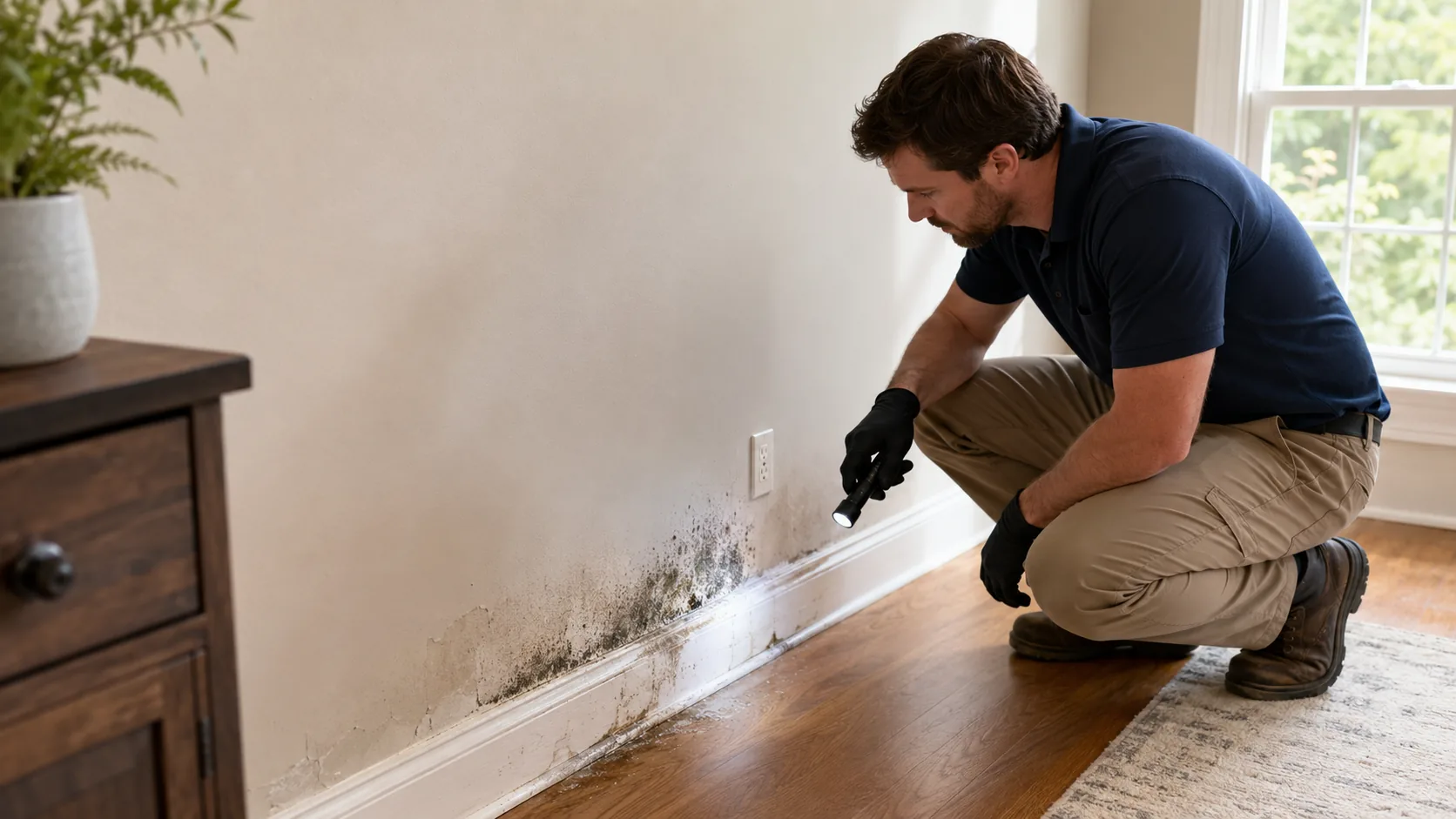
Persistent moisture creates conditions where mold can grow. The first useful question is not only “How do I clean this?” but also “Why is this area still damp?”
Address the water source
Leaks, condensation, roof intrusion, plumbing failures and trapped moisture can all keep materials damp. Cleaning is unlikely to hold if the source continues.
Consider what material is affected
Hard, non-porous surfaces behave differently from drywall, insulation, carpet padding and other porous materials that can absorb moisture and contamination. If drywall is a specific concern, see the wet drywall guide.
Avoid simply painting over the problem
Coating a damp or contaminated surface can hide symptoms without fixing the moisture condition underneath.
Recurring or widespread mold can point to moisture you cannot see.
Professional evaluation becomes more useful when the affected area is large, keeps returning, involves porous materials or HVAC components, followed contaminated water, or may extend into concealed cavities.
- Identify and correct the moisture source first.
- Ask what areas and materials will be evaluated.
- Avoid promises based only on visible surface treatment.
The dedicated Mold Removal page covers the professional service path, what information to gather, and the current provider-contact option.
View Mold Removal helpRequest a written scope and verify applicable licensing and insurance before authorizing work.Ready to make a decision?
If mold is now the main problem, continue to the dedicated Mold Removal page. If you still need another topic, use the guide library.