
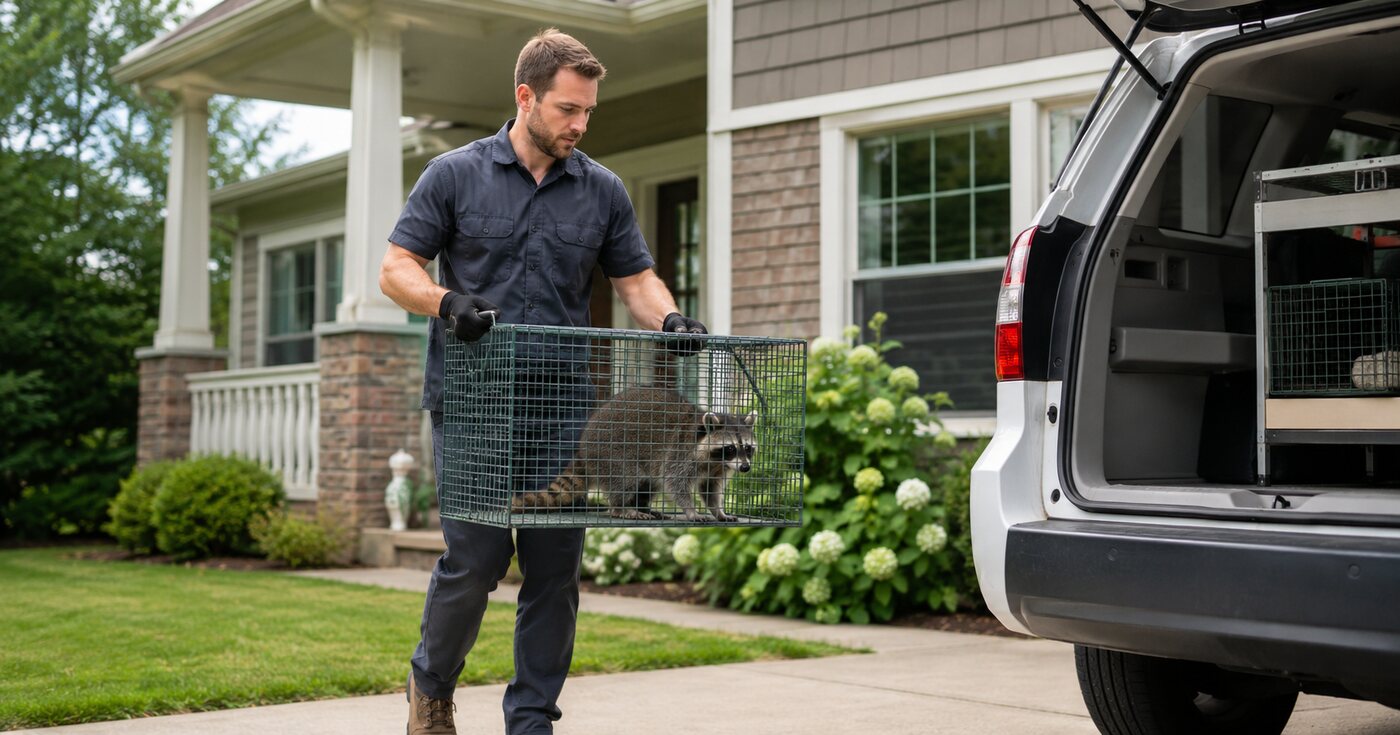
Wildlife problems may involve bats, squirrels, raccoons, opossums, skunks, birds, snakes, moles, mice or rats entering a home or structure.
Document the location and signs
Note whether activity is in the attic, crawlspace, chimney, wall, yard, or another area. Record sounds, droppings, tracks, nesting material, damage, or visible entry points without approaching the animal.
Protect people and pets
Do not corner, touch, feed, poison, or attempt to capture wildlife. Keep people and pets away. If anyone has been bitten or scratched, contact an appropriate medical or public-health service.
Review the proposed service scope
Ask whether inspection, humane removal, exclusion work, cleanup, repairs, and follow-up are included. Confirm how active animals and dependent young will be handled before authorizing work.
Get ready for a wildlife-removal visit.
Gather the details that help explain where the animal may be entering or nesting.
- Attic, crawlspace and structural wildlife concerns
- Signs such as noises, droppings, tracks or nesting
- Visible entry points and affected areas
Describe the animal, location, sounds, droppings, damage and visible entry points without approaching it.
Call (866) 227-3850 Calls may connect you with an independent service provider.Before authorizing work
Confirm the inspection findings, removal plan, written price, follow-up terms, and applicable licensing and insurance.