
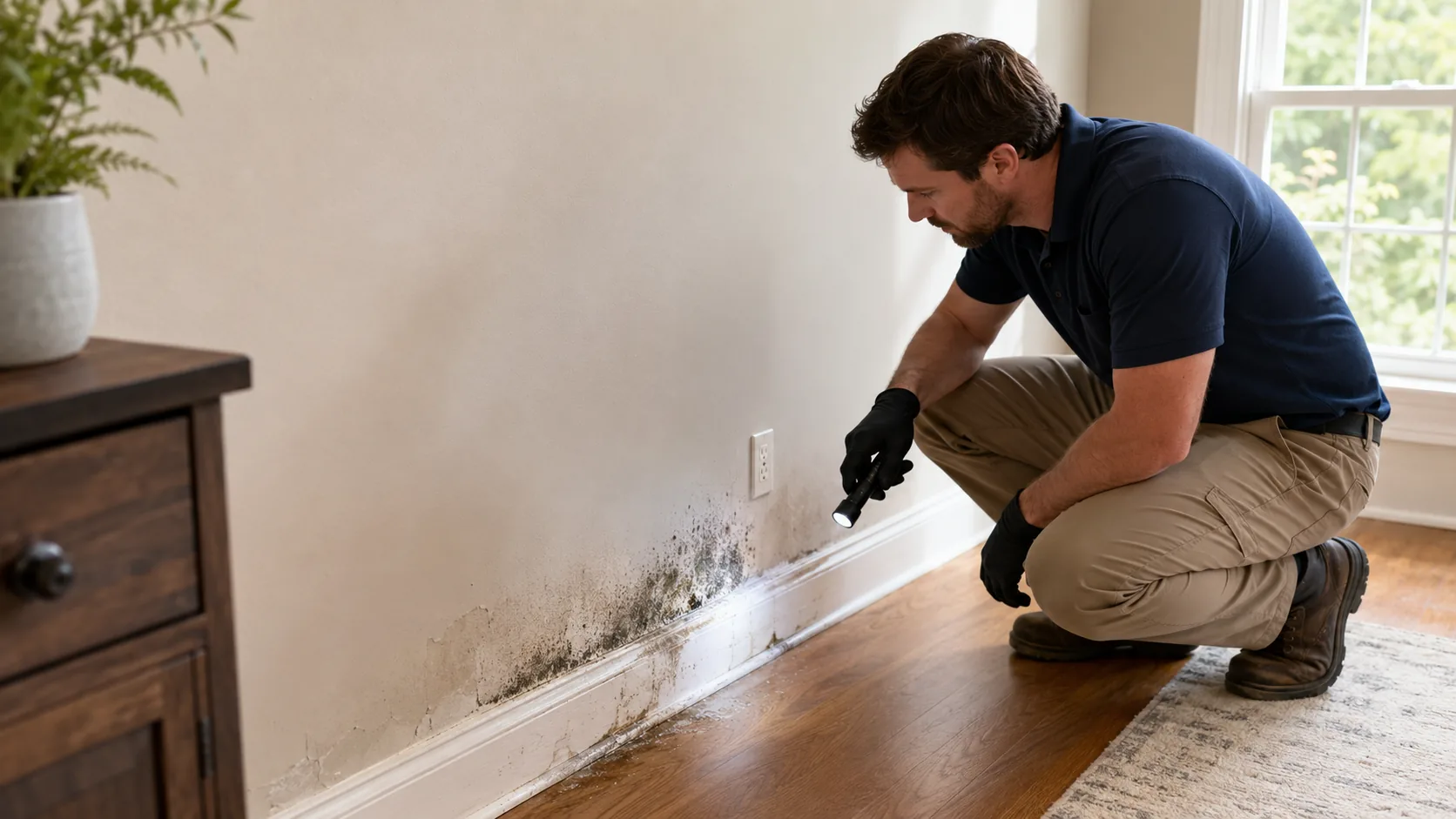
Avoid ozone generators and products marketed as shortcuts to mold remediation. Do not use an air device to justify staying in an unsafe flooded or sewage-contaminated building, and never disturb suspect moldy HVAC materials yourself.
Portable air cleaners and HVAC filters can remove some airborne particles when appropriately sized and used, but they do not eliminate the moisture that allows mold to grow. An air purifier is not a substitute for fixing a leak, safely cleaning affected materials or inspecting wet insulation. This distinction matters when a product description promises to 'remove mold from a room.'
An air cleaner can support a moisture-control plan; it cannot certify that a mold-affected room is safe. Check the equipment specifications rather than relying on a product claim.
What an air cleaner can and cannot do
Compare filter claims with moisture-control work needed to address mold at its source.
- Filter airborne particles: Particle filters can collect some particles moving through the device. Performance depends on airflow, filter type, placement, upkeep and room size. Filtration is supplementary, not source repair.
- Repair moisture sources: A leaking pipe, damp wall, wet carpet pad or recurring condensation remains wet regardless of a room air cleaner. Identify and correct the underlying cause.
- Remove visible mold: An air purifier does not physically remove growth attached to drywall, grout, furniture or ducts. Cleanup and possibly material replacement depend on surface and contamination conditions.
- Choose appropriate technology: EPA's home air-cleaner guide explains particle removal and cautions against devices producing ozone. Do not assume an advertised 'mold-killing' feature certifies indoor safety.
- Manage room conditions: Where safe, ventilation and humidity control may help reduce dampness, but an air purifier is not a dehumidifier. Monitor indoor relative humidity separately from building-material moisture.
- Know when to escalate: Persistent odors or mold near air handling equipment can mean concealed growth or a system problem. Request an investigation rather than buying a larger filter as the only response.
Compare the product to the actual problem
Write down whether the goal is lowering airborne particles, stopping condensation, addressing a musty smell or dealing with wet building material. For air particle filtration, compare published performance and filter maintenance instructions; for a wet wall, prioritize source repair and a moisture assessment. Treat cure-all advertising skeptically.
Questions about air purifiers and mold
Can a HEPA filter remove mold from drywall?
No. A filter may collect airborne particles, but it cannot remove growth attached to the drywall or solve the water source.
Does an air purifier make a flooded room safe?
No. Electrical, structural and contamination hazards require independent assessment. Filtration is not a safety certificate.
Is an air purifier the same as a dehumidifier?
No. A dehumidifier removes air moisture; a particle air cleaner filters some airborne particles. Neither automatically repairs wet subfloors.
Should I use ozone to eliminate mold smell?
EPA warns about ozone generators and does not recommend relying on them to solve indoor air pollution. Correct the moisture source.
Can filters replace a mold inspection?
No. Concealed water damage or contamination may require source investigation and material assessment, even if the room smells better.
Air cleaning and mold references
Check the cited sources and applicable local safety requirements before acting.
Published November 22, 2026; text updated November 23, 2026.
If the musty smell continues
If air cleaning is not enough, review dehumidifiers and moisture control.