
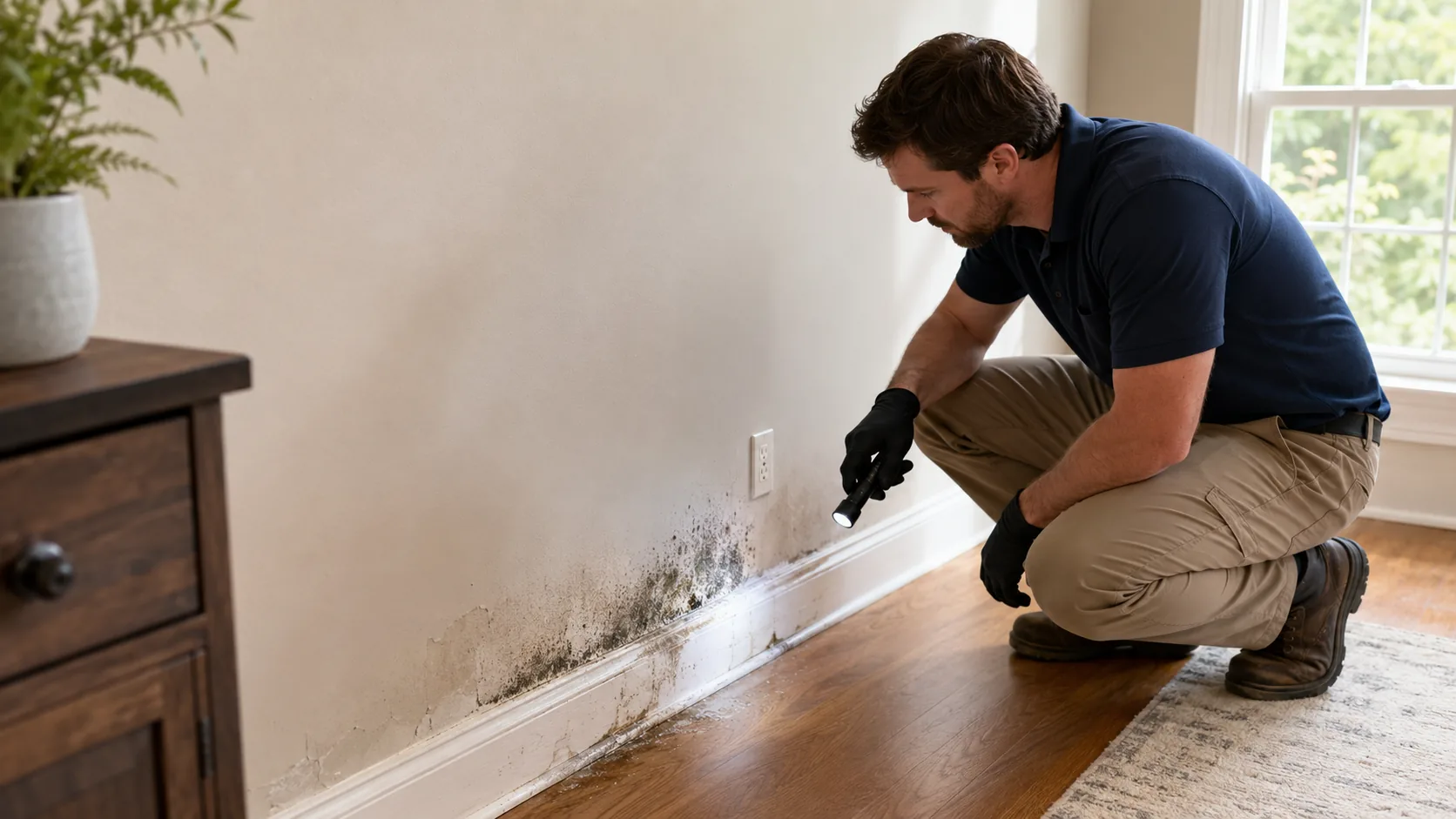
If there has been flooding, sewage backup, unstable structure, exposed wiring or significant water damage, follow emergency safety precautions first. Do not open suspect walls or enter a hazardous basement just to locate an odor.
A recurring damp, earthy or musty odor can signal a moisture source that is out of sight: a leak under a sink, a wet carpet pad, condensate near air-conditioning equipment, an enclosed wall cavity or high indoor humidity. But odors are not specific enough to diagnose mold species, contamination or an individual's health condition.
EPA recommends investigating moisture and water-damage history and addressing the underlying source. EPA's homeowner mold guide explains why prevention depends on keeping materials dry and why wet or damp areas need prompt attention.
Record when and where the smell is strongest
Does the odor increase after rain, showering, dishwasher use or air-conditioner operation? Is it concentrated near a bathroom cabinet, closet, basement stairwell or one exterior wall? Record observations over several days if the area is safe to occupy, without assuming correlation proves causation.
Note known leaks, water stains, condensation, swollen trim, loose flooring, damp boxes or blocked ventilation. Take photographs of visible issues when safe. The local RHH incident/photo log helps organize the observations without uploading private records.
Room-by-room odor and dampness checklist
- Bathroom: Look for visible signs of failed caulk, leaking supply/drain connections, damp trim and poor exhaust flow. Do not cut open finishes to investigate concealed damage without understanding risks.
- Kitchen or laundry: Note drips under sinks, appliance hoses, refrigerator water lines, supply shutoffs and damp cabinets. A leak may travel into adjacent flooring.
- Basement or crawl space: Consider outdoor drainage, groundwater intrusion, plumbing, stored porous belongings and humidity. Avoid potentially contaminated standing water or unstable areas.
- Carpet, flooring and baseboards: Padding and subfloor materials can remain wet beneath a dry-feeling surface. Use the flooring and subfloor guide to understand assessment questions.
- HVAC and condensation: Record persistent condensation, unusual condensate drainage and whether odor changes when equipment runs. Electrical/mechanical inspection belongs to a qualified service professional where hazards exist.
- Attic, ceiling or exterior wall: Rain-driven leaks or condensation may cause hidden moisture. Do not walk on unsupported attic areas or under a sagging ceiling; read ceiling-leak warning signs.
EPA's hidden mold investigation guidance describes moisture and odor clues. Parts of that publication are written for commercial/school buildings; it is not a residential demolition checklist.
Choose actions that address moisture, not just the smell
Ventilation, fixing a confirmed leak and controlling routine humidity may help, but masking the odor with fragrances does not fix a wet wall or floor. EPA advises keeping indoor relative humidity below 60%, ideally 30–50% when possible; a humidity reading alone does not certify hidden materials dry.
If there is a known flood event, widespread wet materials, persistent odor after repairs, visible mold or unexplained moisture, ask a qualified assessor about documenting the source and materials rather than buying a generic air test without a clear purpose. See mold inspection versus testing and when a dehumidifier can help.
Keep a record of repairs and dates; recurring odors after the same wet season may justify checking outside drainage and building envelope conditions. Avoid promising that one device or cleaning treatment will fix every source.
Common questions about musty odors
Can mold grow behind a wall without visible stains?
Yes, moisture and growth can occur on concealed surfaces. A musty smell cannot locate a hidden source by itself; qualified inspection may be needed.
Will an air purifier remove the cause of a musty smell?
Filtration does not stop a leak or dry hidden wet materials. Correct the water source and assess contaminated or porous materials first.
Does a humidity meter prove the wall is dry?
No. Room humidity and moisture within gypsum, insulation or wood are different measurements. Professional evaluation may require material-specific methods.
Will a dehumidifier eliminate all mold?
No. It can help manage air moisture but does not remove existing growth or replace cleaning and source repair. Electrical safety and contamination still matter.
Should I test air samples before checking for leaks?
EPA generally cautions that routine mold sampling is not necessary when the key issue is identifying and correcting moisture. Ask what a test would change in the actual plan.
EPA homeowner mold guide · EPA hidden mold investigation · EPA testing limits. Reviewed November 22, 2026; no diagnosis, home inspection or air-safety certificate.
Related homeowner questions: air purifier limits for mold · mold and air quality directory. These pages cover distinct evidence, safety or provider-scope decisions.
Return before another incident: Keep recurring moisture checks. Record what changed and review manufacturer or local hazard guidance before repairs.
Need a source-first explanation of mold?
Learn the practical difference between visible mold, recurring dampness and material repair.