
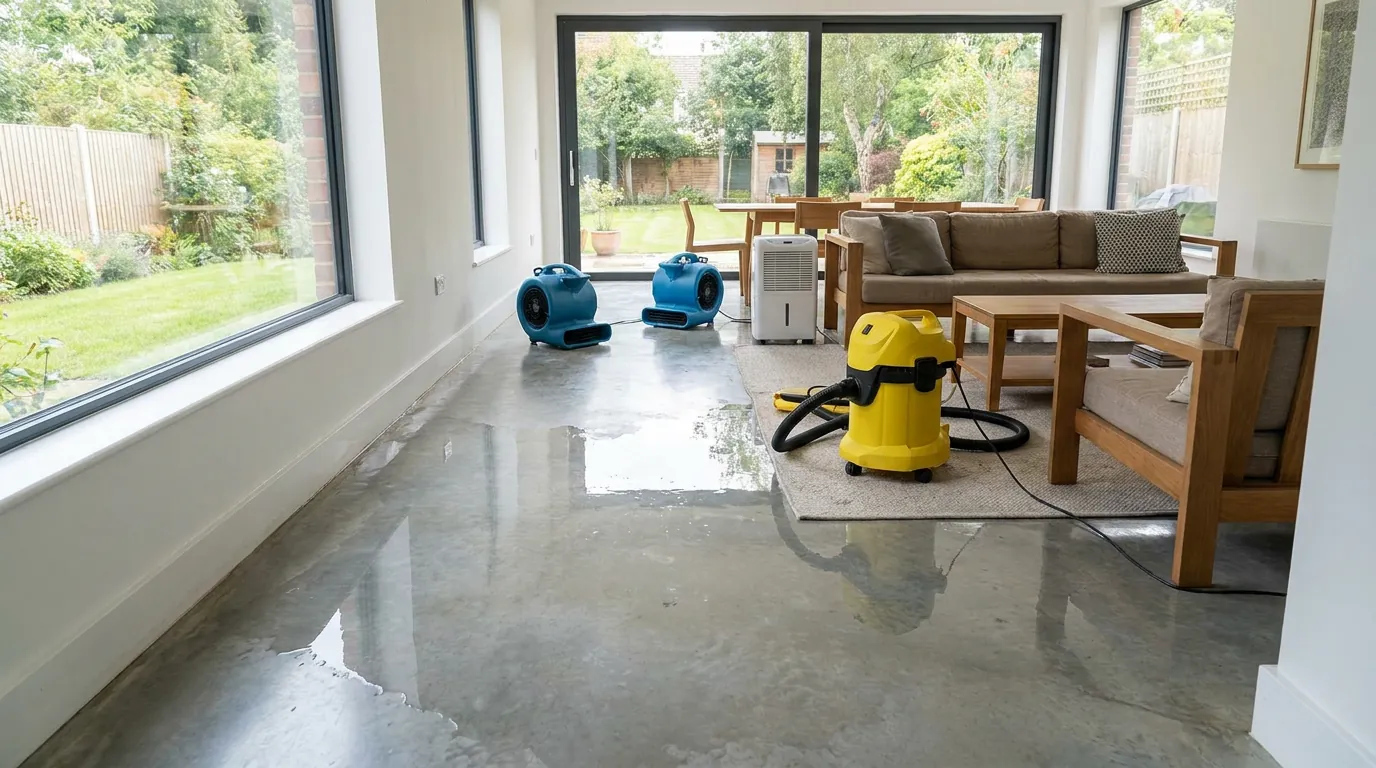
Water near outlets, cords, damaged appliances, sewage or a structurally unsafe area calls for qualified help. After a flood with visible mold, EPA advises not starting fans or dehumidifiers before visible contamination has been appropriately cleaned; moving air may spread contaminants.
A dehumidifier removes water vapor from indoor air. That can help control humidity after a leak or in a persistently damp room when conditions are safe. But a dehumidifier does not remove standing water, repair a pipe, clean sewage, inspect the underside of flooring or prove insulation dry inside a wall.
EPA's flooded-home instructions say portable fans and dehumidifiers may help remove moisture once electricity is safe to use. The same guidance recommends keeping indoor humidity below 60%, ideally 30–50% where possible. This is a room-air target, not a guarantee that a damaged building assembly is dry.
Match the equipment to the actual water problem
- Small, promptly stopped clean-water spill: Once safe, remove visible water and assess whether adjacent materials are wet. Humidity control may be useful; a dehumidifier alone should not replace checking a saturated carpet pad or wall cavity.
- Repeated humidity or condensation: A dehumidifier may lower air moisture if the underlying cause and ventilation are addressed. A room with a persistent wet wall still needs source investigation.
- Floor, drywall or insulation soaked: Professional structural drying can involve moisture mapping, air movement and controlled dehumidification, and sometimes removal of materials that cannot be cleaned or dried safely.
- Outdoor flood or sewage backup: Contamination and electrical hazards change the plan. Do not begin DIY air circulation that might spread contaminated material; seek qualified restoration guidance.
- Visible mold already present: Lowering humidity does not remove existing growth. EPA's flood cleanup guide cautions against starting fans/dehumidifiers before visible mold has been gently cleaned as appropriate.
What should be measured before declaring drying complete?
A household hygrometer can show room relative humidity. Useful for comfort and prevention, it does not measure whether a wood subfloor, gypsum wall, insulation or enclosed cabinet is dry. Ask a restoration company which material measurements were taken, where they were taken, whether the wet area was mapped and how the drying endpoint was determined.
Energy Star's dehumidifier selection guide considers room conditions, product capacity and drainage. Real removal capacity changes with temperature and humidity. Choose the equipment for the actual room conditions; don't use a shopping-chart capacity as a structural drying timetable.
For the distinction between visible-water removal and structural drying, read RHH's extraction and drying guide, or the flooring assessment guide for concealed underlayment.
Manage water collection and ordinary maintenance safely
Follow the manufacturer's placement, electrical, drainage and cleaning instructions. A full collection tank can stop operation or change removal performance. Drainage hoses must not create leaks of their own. Keep cords away from moisture and never improvise electrical connections after flooding.
A typical humidity set point may be helpful for ongoing moisture management, but it does not replace fixing a leak or qualified assessment of wet building materials. If the smell returns after apparent drying, use the hidden moisture and musty odor checklist.
Common dehumidifier questions after water damage
Can a dehumidifier dry water trapped under laminate flooring?
It may reduce room-air humidity, but trapped water and composite cores often require access and material-specific assessment. A dry air reading does not show that underlayment is dry.
Is the EPA 24–48 hour advice a full home-drying schedule?
No. It concerns reducing mold risk by quickly drying damp areas after a leak. Full restoration and measurable structural drying may take longer and depend on actual conditions.
Should I put fans in a room with visible mold after a flood?
EPA advises caution because running fans or dehumidifiers before appropriately cleaning visible mold may distribute contaminants. Follow professional safety guidance.
Does running a dehumidifier kill mold?
No. It removes air moisture, not the underlying growth or source. Existing contaminated materials still require an appropriate cleanup plan.
What humidity should I aim for?
EPA suggests keeping indoor relative humidity below 60%, ideally 30–50% when possible. Conditions vary; avoid condensation, and remember the reading is not a structural-drying certificate.
EPA flooded home · EPA post-flood drying · ENERGY STAR dehumidifiers. Reviewed November 22, 2026. Not a product guarantee or professional drying certificate.
Related homeowner questions: air purifier and dehumidifier differences. These pages cover distinct evidence, safety or provider-scope decisions.
Want to understand drying costs?
Our calculation tool gives a planning scenario, not a binding local contractor quote.