
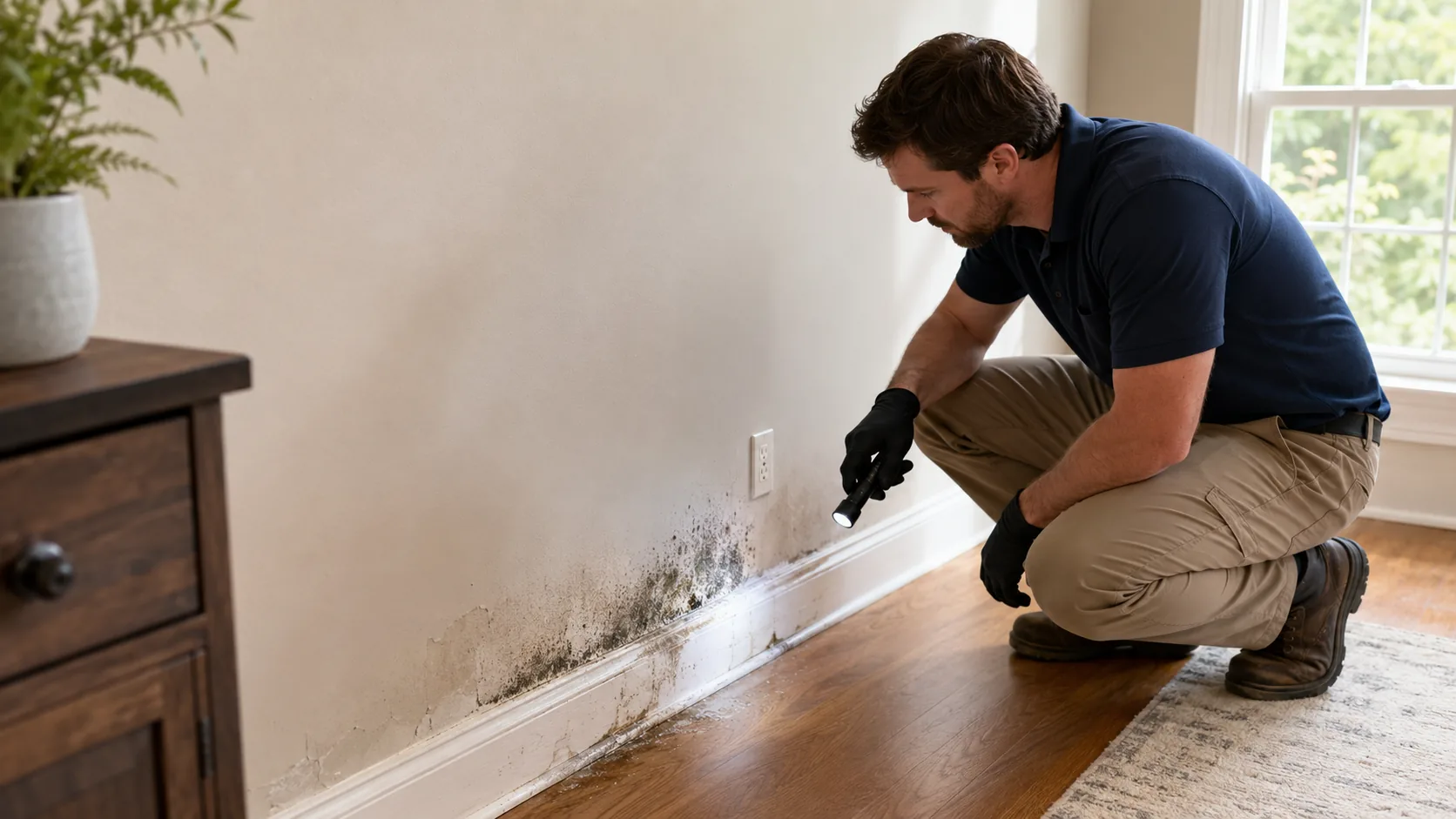
Disturbing contaminated building materials may spread particles. Serious leaks, sewage exposure, damaged electricity and structural concerns require their own safety response.
Inspection and testing are not the same purchase. An inspection investigates moisture sources, water history, visible conditions and affected materials. Testing may collect air or surface samples for laboratory analysis. A sample without a clear question often does not tell a homeowner which leak to fix or which damp materials need professional evaluation.
EPA says that if visible mold growth is already present, sampling is often unnecessary. There are no federal EPA numerical standards for an acceptable indoor mold-spore count. Results therefore should not be sold as a universal “pass/fail” clearance number. See EPA: Is Sampling or Testing Necessary?.
Start by identifying the reason for the concern
Is there an obvious wet wall, a musty room, a past pipe burst, recurrent condensation, or a recently flooded basement? Record the location, water event and dates. For persistent odors without an obvious stain, see the separate musty-smell investigation checklist.
Professional assessment is more valuable when water may be concealed in wall cavities, below floors or behind cabinets, or when material removal could spread contamination. Ask the inspector what physical observations, moisture measurements and limitations will support their conclusions. EPA’s mold problem guidance emphasizes moisture control rather than a single laboratory number.
When might a laboratory sample be worth discussing?
- Visible growth plus an obvious moisture source: Ask what further information sampling would change. EPA notes that routine sampling usually is not needed simply to verify what can already be seen.
- Uncertain source or disputed conditions: A qualified assessor may explain a specific sampling purpose, the proposed method and how results would influence decisions. There is still no single EPA indoor “safe spore” threshold.
- After remediation: Ask what visual, moisture and material-condition evidence defines completion. A proposed air test should have a defensible question, not a guaranteed universal safety certificate.
- Health concerns: Symptoms are not diagnostic of a specific mold source; seek appropriate health advice rather than purchasing a home test to diagnose illness.
EPA's sampling guidance explains why interpretation is limited. EPA also says it does not certify mold inspectors or mold remediation firms; verify relevant state requirements and independent experience. See EPA's professional selection advice.
Compare the deliverables before agreeing to an inspection
Ask for a written description of inspected rooms, inaccessible areas, visible moisture damage, documented leaks, measurements used, photographic observations, optional sampling methodology, lab reporting and the recommended next assessment. A fee labeled “mold inspection” can cover very different work.
Request a breakdown for property inspection, specific samples, laboratory fees, any follow-up visit and a report. RHH cannot quote a reliable universal mold inspection price without location, property and work scope. A large fee does not automatically make a test useful. See the contractor comparison guide for documenting scope and questions.
Where independence matters, ask whether an assessor also sells remediation and how conflicts are handled. Do not assume a firm’s marketing use of “EPA certified” refers to an EPA mold-inspector credential.
Questions homeowners ask about mold tests
Should I test before cleaning clearly visible mold?
EPA generally does not recommend routine testing simply to identify a visible mold problem. The priority remains correcting the moisture source and deciding appropriate cleanup based on extent, material and safety.
Can an inexpensive air test prove my house is mold-free?
No. Air sampling varies with location, timing and method, and EPA has no federal numerical standard for indoor mold-spore counts. A result is not a universal guarantee.
Does a moisture meter measure mold?
No. Moisture instruments help investigate dampness in building materials. Their readings do not identify mold species or prove a surface is sanitary.
Do all states license mold inspectors?
No. Requirements vary by jurisdiction and service type. Check the relevant state regulator and verify the individual or company's actual qualifications.
What if I can smell mold but see nothing?
Investigate water sources, ventilation and concealed dampness before assuming testing is the right first step. Start with the hidden-moisture odor guide.
EPA sampling necessity · EPA interpretation limits · EPA contractor qualifications. Reviewed November 22, 2026. General homeowner education; no inspection, testing service, medical diagnosis or regulatory certification.
Related homeowner questions: mold remediation pricing and quote scope. These pages cover distinct evidence, safety or provider-scope decisions.
Need a source-first mold action plan?
Review how moisture, affected materials and professional cleanup decisions fit together.