
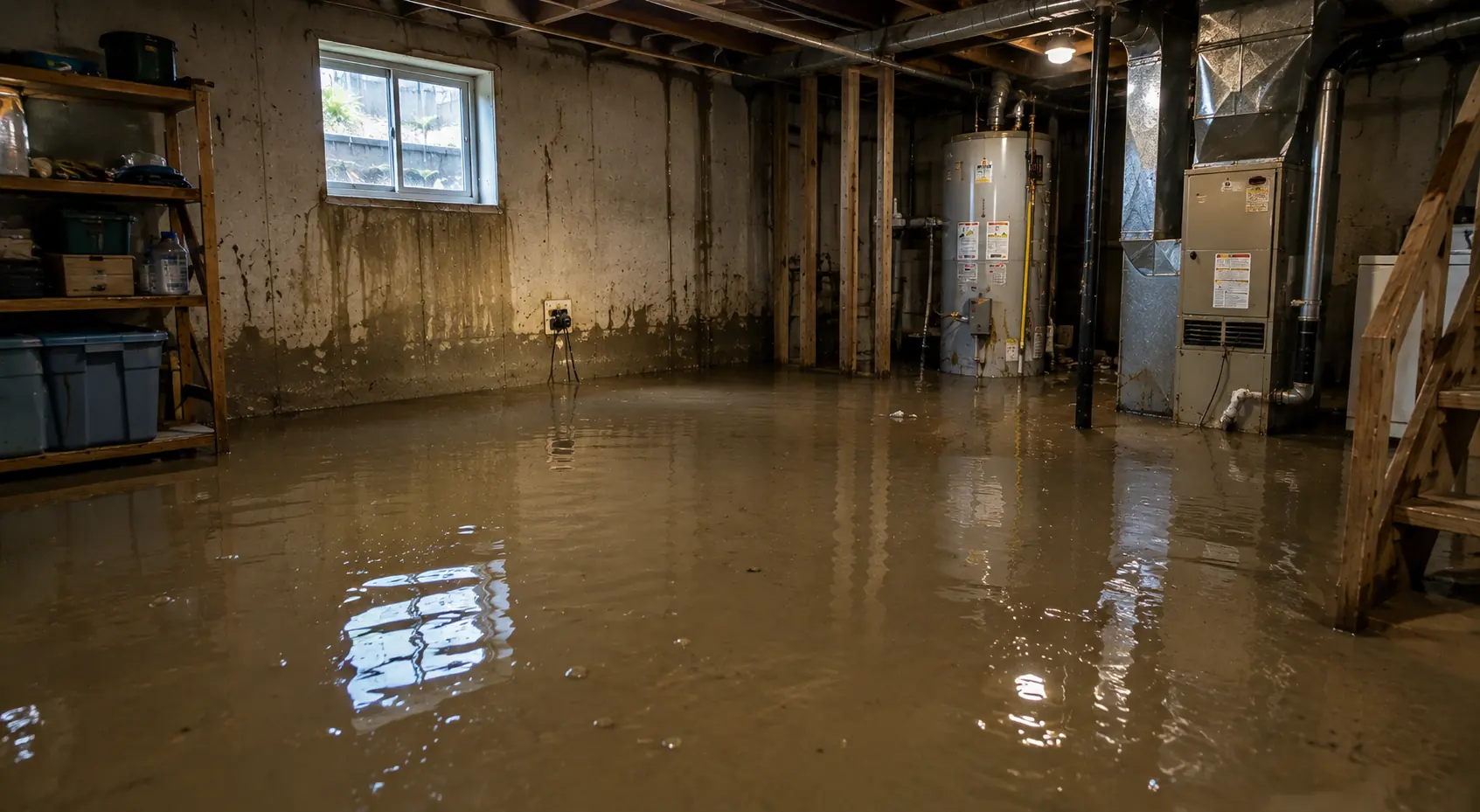
Stay out of an area where standing water may contact electrical systems, where sewage may be present or where walls and floors are unstable. Do not dig around foundations, operate pumps from wet electrical connections or enter hazardous crawl spaces without qualified support.
A basement that gets wet during heavy rain may be affected by exterior surface runoff, groundwater pressure, a failed sump pump, a blocked drain or a broken pipe. The same puddle on the floor can have different causes. Choosing a waterproofing product before identifying that source risks paying for a treatment that does not address the problem.
Note whether water appears after rainfall, during appliance use or when the sump pump operates. Those clues help compare proposals, but never make an unsafe inspection to collect them.
Match the suspected water source to the work type
Identify where water enters before comparing drainage or waterproofing work.
- Roof drainage and gutters: Note whether downspouts empty toward the foundation and whether overflowing gutters coincide with the water event. Exterior routing problems may be part of a larger drainage concern.
- Surface grading: Observe whether the yard slopes toward the house or water ponds against the wall after rain. Major grading or drainage changes can affect neighboring land and may require local permits.
- Groundwater or seepage: Water appearing at wall-floor joints or after prolonged wet weather may require specialist foundation and water-management assessment. Interior paint cannot reliably relieve all exterior water pressure.
- Sump pump failure: Record pump status only from a safe dry area. FloodSmart notes a working sump pump, backup options and water alarms may mitigate basement flood damage, but they do not eliminate all flood risk.
- Drain or sewer backup: Water rising from a floor drain or other fixture can indicate a separate wastewater problem. Backflow precautions and plumbing work differ from exterior foundation waterproofing.
- Wall cracks or structural movement: New cracks, displaced walls, significant movement or settlement warrant qualified structural evaluation before applying coatings or drilling drainage openings.
Compare proposals by the water route they actually address
Ask each provider to identify the likely entry route, evidence supporting the diagnosis, affected basement zones, proposed exterior and interior work, sump capacity/backup details, relevant permits, excavation or restoration obligations, and what the warranty excludes. A limited coating and major exterior drainage reconstruction are not interchangeable services.
Questions about basement drainage
Will waterproof paint stop every basement flood?
No. Surface treatments do not necessarily address groundwater pressure, drainage, pipe bursts or sewer backup.
Does a sump pump guarantee a dry basement?
No. Power loss, blocked discharge, mechanical failure and larger floods can exceed a system's capabilities.
Should I seal a structural crack myself?
Not before evaluating whether it reflects movement or active water pressure; a qualified foundation professional may be needed.
Can gutters affect basement flooding?
Yes. Poor discharge may concentrate water near the foundation, although other sources can produce similar symptoms.
Will insurance always cover waterproofing?
No. Coverage for preventive upgrades and damage varies by policy and cause; confirm with the insurer.
Basement flooding and drainage references
Check the cited sources and applicable local safety requirements before acting.
Published November 22, 2026; text updated November 23, 2026.
Return before another incident: Prepare gutters and drains before heavy rain. Record what changed and review manufacturer or local hazard guidance before repairs.
If the basement is already flooded
If water is already inside, start with basement flooding safety and cleanup.