
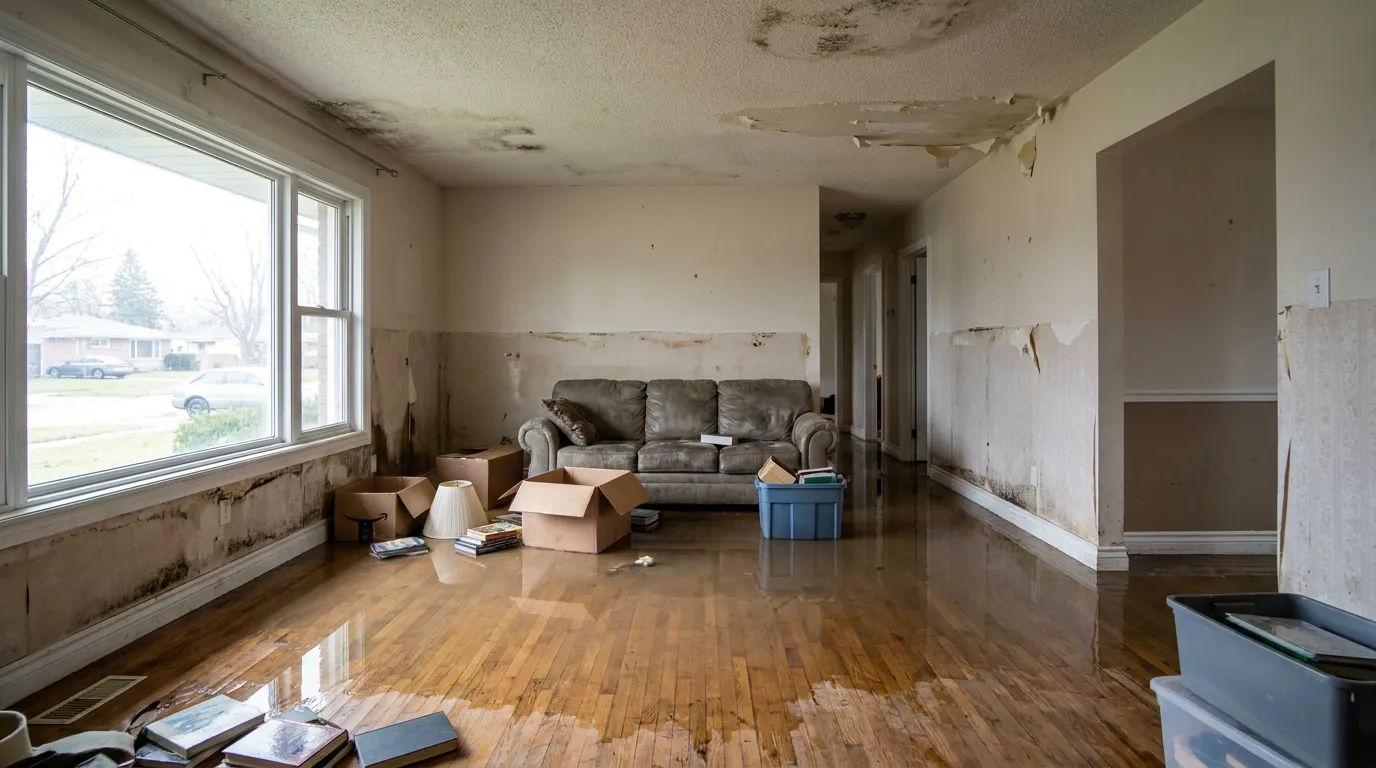
Do not enter areas with uncertain electrical safety, unstable structures, sewage, fuel or chemical contamination.
The fastest-looking cleanup is not always the safest or cheapest. A good sequence prevents you from throwing away useful evidence, spreading contamination or closing wet materials inside walls and floors.
Make the area safe enough to approach
Check for electrical, structural and contamination concerns before moving into the affected space.
Document the damage
Photograph rooms, water lines, damaged finishes and belongings before large-scale removal when conditions allow.
Remove standing water
Extraction reduces the immediate water load, but saturated materials and hidden cavities can remain wet afterward.
Clean and separate affected materials
Keep contaminated or soaked materials from being moved through clean parts of the home. Some porous materials may not be safely salvageable.
Dry the structure before repairs
Walls, floors and cavities need adequate drying before replacement finishes are installed. Rebuilding too early can trap moisture.
- Photos and videos before major cleanup.
- Dates and notes about the source and water level.
- Receipts for emergency materials and services.
- Scopes, estimates and drying records from professionals.
Need help deciding what comes next?
Use the first-step homeowner guide to organize cleanup, drying and repair decisions.