
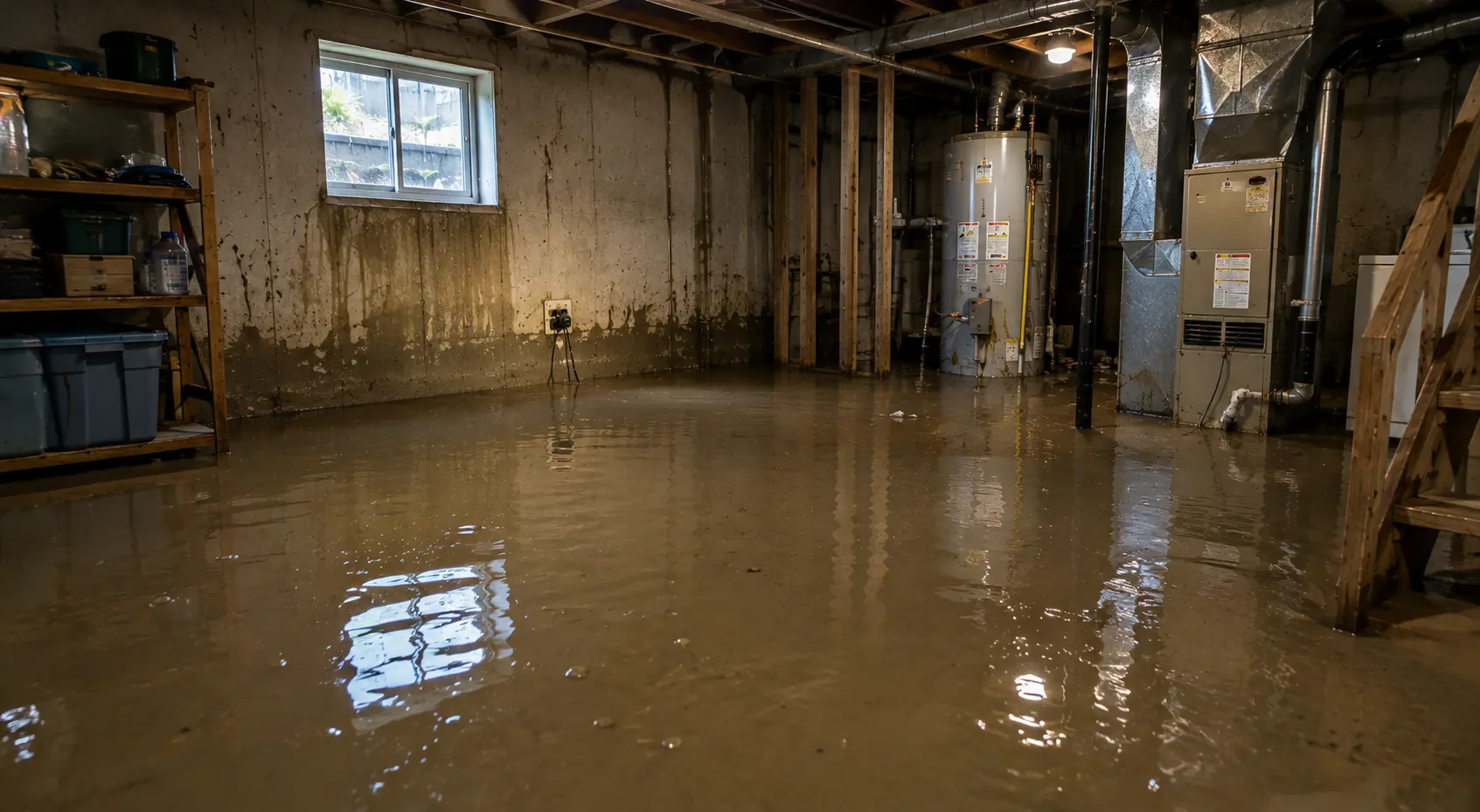
If electrical equipment may still be energized, the structure looks unstable, or the water may be contaminated, stay out until the hazard is addressed.
Basements collect water from many causes: plumbing failures, groundwater, sump issues, rain entry and outdoor flooding. The source matters because it changes both safety and cleanup decisions. If a sewage backup may be involved, use the contaminated-water safety guide before attempting cleanup.
Identify the source and risk level
Clean plumbing water is different from groundwater, storm runoff or sewage. If you are unsure, treat the water cautiously.
Document conditions before major cleanup
Photograph water depth, affected walls and flooring, damaged belongings and the apparent entry point when safe.
Extract standing water
Removing pooled water is the first drying step, but it does not mean the structure itself is dry.
Separate what can dry from what cannot
Some porous materials may need removal depending on contamination, saturation and whether they can be dried safely.
Dry before rebuilding
Do not close wet cavities or install replacement finishes until affected materials have had enough time and airflow to dry properly.
- Water is deep, widespread or still entering.
- Electrical safety is uncertain.
- Sewage, storm runoff or unknown contamination is involved.
- Walls, insulation or structural materials are saturated.
- You cannot verify that hidden areas are drying.
Ready to organize the recovery?
Follow the complete homeowner sequence from safety through documentation and drying.