
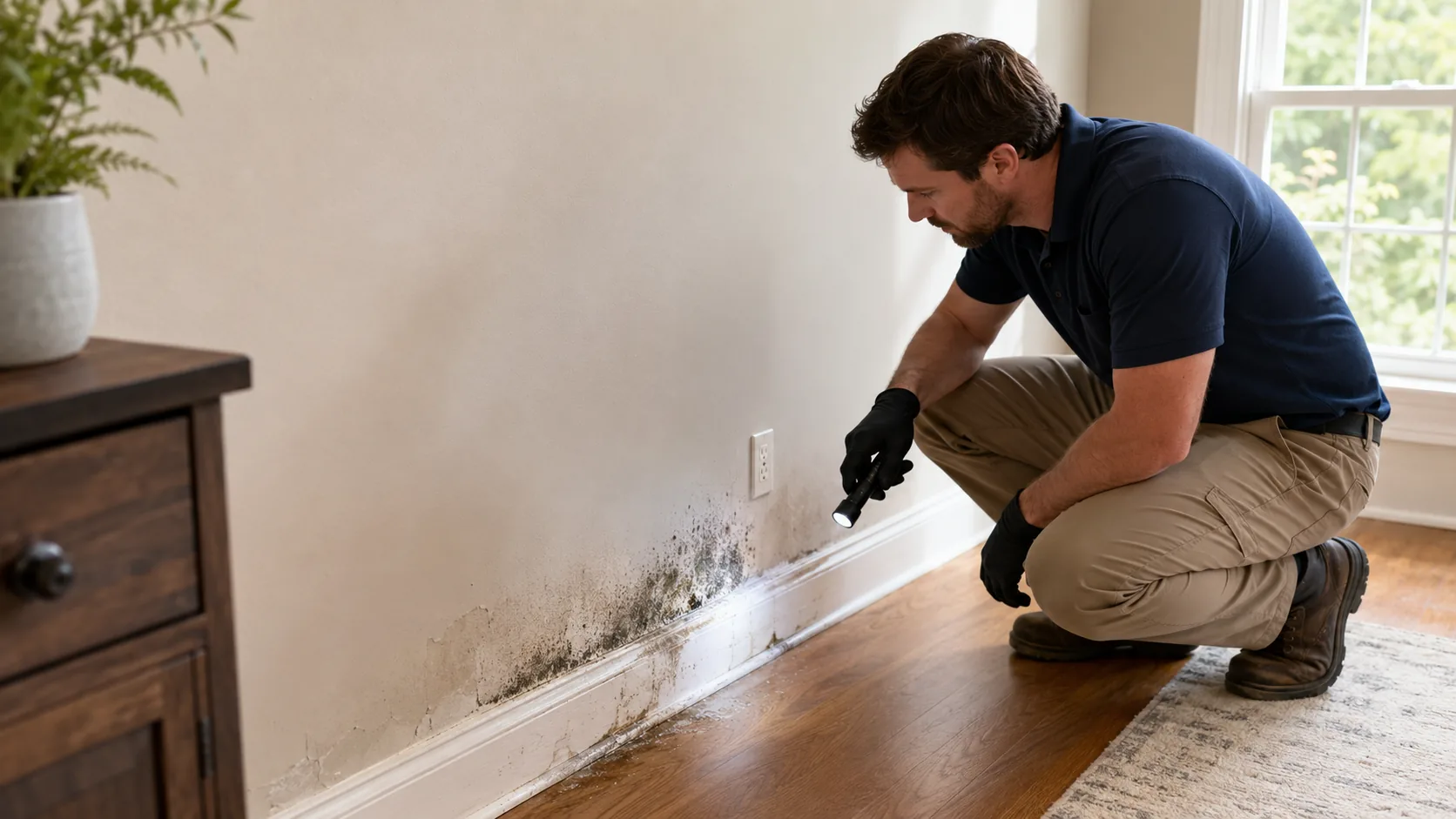
Do not mix bleach with ammonia, acidic products or other cleaners. If wallboard is swollen, sewage entered the room, electricity is exposed or affected material is extensive, ask a qualified professional before disturbing walls.
Black, green or pale spots near shower grout do not identify a particular species of mold. A shower is routinely humid, but recurring growth after cleaning may also be associated with a leaking fixture, failed seal, wet wall material or poor exhaust ventilation. Start with the actual moisture route instead of choosing chemicals solely from the stain color.
If the stains return after surfaces have dried, note where and when they reappear. A visual check cannot tell you whether the wall behind a shower is wet.
Separate surface humidity from concealed water damage
Check humidity, leaks and concealed moisture before choosing a cleaning approach.
- Grout and hard tile: Look at whether spots are limited to washable tile and grout or also extend into paper-faced drywall, cabinets and trim. EPA says hard surfaces can often be cleaned with detergent and dried; porous moldy materials may need different treatment.
- Repeated dampness: Note whether the fan actually exhausts humid air, whether water pools on ledges and whether caulking or plumbing joints remain wet long after a shower. An exhaust fan is only part of the answer if a hidden supply leak persists.
- Soft walls or loose tiles: Bulging or soft finishes, a musty smell near a shared wall, or recurring discoloration around a tub can suggest wet backing. A cosmetic cleaning job cannot certify the cavity dry; ask a qualified inspector to trace the leak.
- Discoloration versus identification: Color alone does not distinguish mold type, severity or health effects. Routine air sampling is often unnecessary with visible growth; obtain a clear moisture inspection and cleanup scope instead of a generic species-label promise.
- Aftercare: Fix water intrusion, improve appropriate ventilation and check the same areas after ordinary showers. If spots return rapidly or cover a larger concealed area, seek a broader assessment rather than repeatedly painting over the growth.
What to ask before authorizing a bathroom-mold job
Request separate scope lines for fixing the moisture source, assessing affected backing or wallboard, cleaning recoverable hard finishes and replacing materials that cannot be appropriately cleaned. Ask how the provider will confirm drying. If the problem is primarily recurrent shower humidity, an enormous whole-house treatment may not be appropriate.
Questions about recurring bathroom mold
Can I identify black mold by its color?
No. Appearance and color cannot establish species or health implications. Treat it as a moisture and building-material problem rather than using a label as a diagnosis.
Does regrouting solve mold under tile?
Not if the substrate is already wet. Regrouting may change a surface joint but does not replace source investigation or appropriate repair of concealed damage.
Do I need a laboratory mold test?
EPA notes routine sampling is often unnecessary when growth is visible. Ask what a test would change in inspection or cleanup decisions.
Can a bathroom fan prevent every recurrence?
No. It may reduce routine shower humidity but cannot repair a leaking pipe, poorly sealed enclosure or existing moldy porous wall material.
When should a professional assess it?
Consider a qualified assessment for recurring concealed dampness, soft walls, larger affected areas, sewage contamination or uncertainty about safe material removal.
Bathroom mold and moisture references
Check the cited sources and applicable local safety requirements before acting.
Published November 22, 2026; text updated November 23, 2026.
If shower mold returns
If staining persists or spreads, review when mold testing is useful.
More about indoor moisture
When wet drywall needs replacement · Mold after water damage