
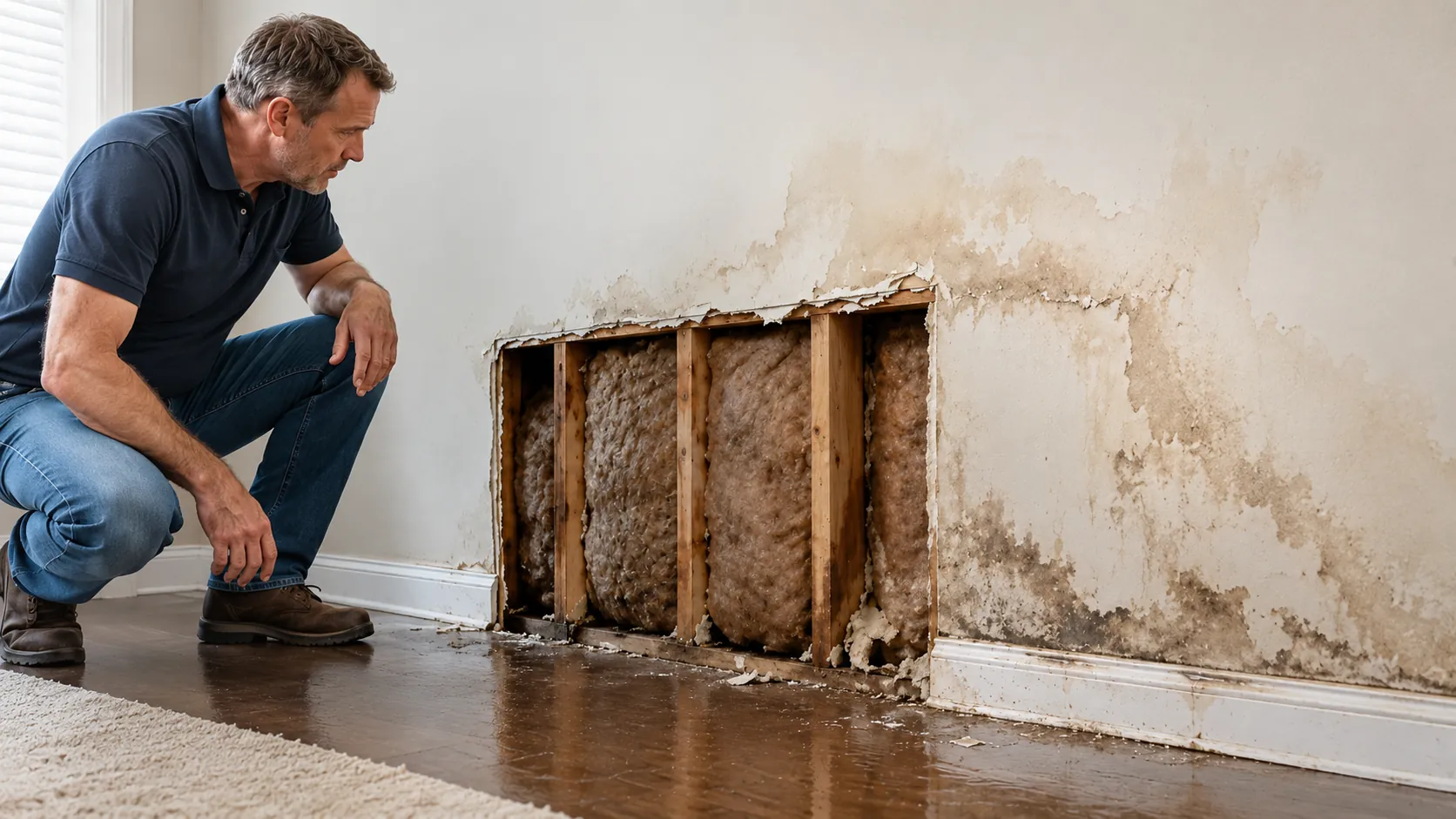
The decision is less about whether drywall touched water at all and more about what type of water was involved, how wet the material became, whether it stayed structurally sound and whether the wall cavity can actually dry.
- The water was contaminated.
- The drywall has softened, swollen, sagged or lost shape.
- Wet insulation behind it cannot dry adequately in place.
- Moisture remains trapped inside the cavity.
- Mold growth is present or suspected.
Some clean-water situations may dry in place
When the water source is clean, the material remains intact and drying begins quickly, removal is not always automatically required.
The wall cavity matters
A painted surface can look dry while insulation, framing or the back side of drywall remains wet. The ability to inspect and dry the cavity affects the decision.
Do not rebuild over unresolved moisture
Replacing trim, painting or closing walls before the assembly is adequately dry can hide a moisture problem rather than solve it. If recurring mold is part of the concern, see the mold guide for moisture-focused context.
- How was moisture inside the wall assessed?
- Is insulation wet?
- What makes this drywall salvageable or unsalvageable?
- How will drying progress be verified?
- What condition needs to be reached before repairs begin?
Ready to make a decision?
If you still need another topic, use the guide library. If you are ready to act, choose the service category that matches the problem.