
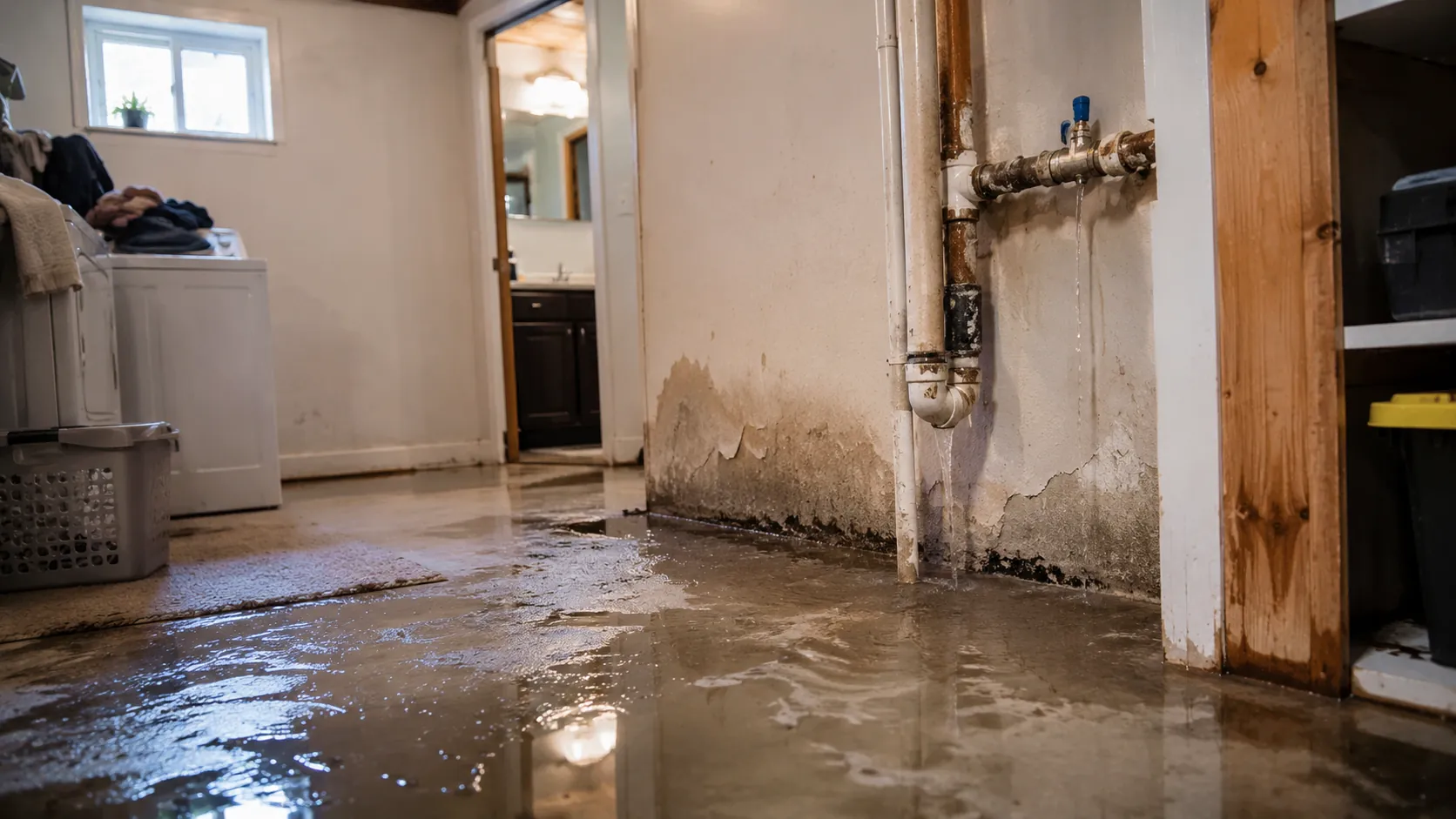
Do not cut into a wall or ceiling around possible plumbing, wiring or structural elements simply to chase a stain. Avoid wet electric systems or unstable overhead finishes; call qualified service where hazards exist.
A concealed plumbing leak can show up as recurring wall paint bubbles, a soft cabinet base, a damp flooring seam, a ceiling stain or a water bill that no longer matches usage. Those signs are clues, not definitive proof of the leak location. Keep safety and evidence separate from destructive investigation.
Photos, dates and water-meter observations can help a professional investigate. They do not identify a safe place to cut into a wall or prove the source of a leak.
Track evidence by location and timing
Track where and when signs appear before opening walls or removing materials.
- Unexplained meter activity: Where the utility and meter configuration allow, compare water-meter readings during a period of known no-use. Automatic irrigation, appliances or shared systems may affect interpretation; ask the utility for guidance.
- Stains and soft finishes: Record which wall or ceiling area changes and when. Moisture may travel along framing, so the visible stain may not be directly below the source.
- Cabinets and appliances: Look for safe-to-see drips around hose connections, sinks, water heaters and laundry appliances. Keep hands away from wet electrical components.
- Flooring and baseboards: Swollen trim, cupped planks or persistent damp odors may indicate water trapped beneath finished surfaces. Ask how the underside will be assessed.
- Rain-only patterns: Leaks coinciding with storms may relate to roof, window or exterior drainage rather than indoor supply piping. Record weather conditions alongside the water event.
- Claim-ready observations: Keep dated photographs and invoices, not just an estimate of how much water escaped. The insurer may distinguish sudden water discharge from gradual leakage or rain intrusion.
Ask for a source and moisture map, not a speculative demolition plan
A useful professional inspection should explain where moisture readings were taken, likely sources, how the plumbing or building envelope will be checked, and what access is needed before demolition. Separate repairing the cause from drying wet walls, insulation or flooring. If the source is unknown, avoid certifying a particular pipe as broken based solely on a bill or odor.
Questions about concealed water leaks
Does a high water bill prove a pipe is leaking?
No. Usage changes, irrigation, toilets, meter error and billing adjustments can also affect totals. Investigate with the utility and a qualified plumber.
Is a stain directly below the leak?
Not necessarily. Water can travel inside cavities before surfacing.
Does a dry-feeling wall mean no hidden leak?
No. A visible surface can dry while internal material remains wet; professional moisture assessment may be needed.
Can a leak detector replace a plumber?
No. A device may alert to moisture or flow but cannot repair piping or confirm every possible leak.
Will an insurer accept my photos as proof of coverage?
Photos support documentation, but coverage still depends on policy terms and investigation.
Leak investigation references
Check the cited sources and applicable local safety requirements before acting.
- EPA WaterSense Fix a Leak Week
- EPA WaterSense household maintenance
- EPA leak and flow monitoring guide
Published November 22, 2026; text updated November 23, 2026.
Return before another incident: Keep a monthly inspection history. Record what changed and review manufacturer or local hazard guidance before repairs.
If the leak reaches the ceiling
If the damage is overhead, review ceiling-leak precautions next.