
If a ceiling appears unstable, water is entering a light fixture, or nearby wiring may be wet, keep people away and arrange qualified emergency or utility assistance. Do not climb up, open the cavity, poke a water-filled bulge or touch potentially energized equipment to find the leak.
A water stain is a symptom, not a confirmed diagnosis. Water may travel along beams, pipes or insulation before becoming visible. The stain may not be directly below the leak. An upstairs bathroom, a supply line, rain at the roof edge or HVAC condensate can create similar marks, but their repairs and insurance discussions can differ.
FEMA advises checking for sagging floors and ceilings after a disaster. EPA also advises avoiding repairs that seal unresolved water inside building materials. A professional should assess a ceiling that is visibly changing shape or deteriorating.
Match the timing of the leak to possible sources
When did it start? What was operating just before it appeared? Record facts rather than opening a ceiling to guess.
- Water appears during rain or wind: Roof openings, flashing, gutter problems or other exterior routes are possibilities, but the stain location does not establish the entry point. Avoid roof access during storms or after structural damage. See storm-damage precautions.
- Water appears when an upstairs fixture runs: An overflowing tub, failed drain connection, appliance hose or concealed supply line could be involved. If an accessible shutoff can be reached safely, limiting incoming water may reduce additional damage. See the burst-pipe response guide when a supply leak is suspected.
- Water appears near HVAC or condensation areas: A condensate blockage or mechanical equipment problem may be involved. Do not operate wet electrical equipment and ask the relevant qualified trade to inspect.
- Origin remains unknown: Note when the drip starts and stops and ask for a source investigation. Do not assume stains tell you the water contamination category.
Three warning signs that change the next action
- Bulging, drooping or visibly deforming drywall: Avoid the area beneath it and seek a qualified evaluation. A wet ceiling can contain trapped water and weakened materials.
- Water around recessed lighting, switches or wiring: Treat possible electrical exposure as a serious hazard. Never operate a switch or breaker from a wet or unsafe area just to test it.
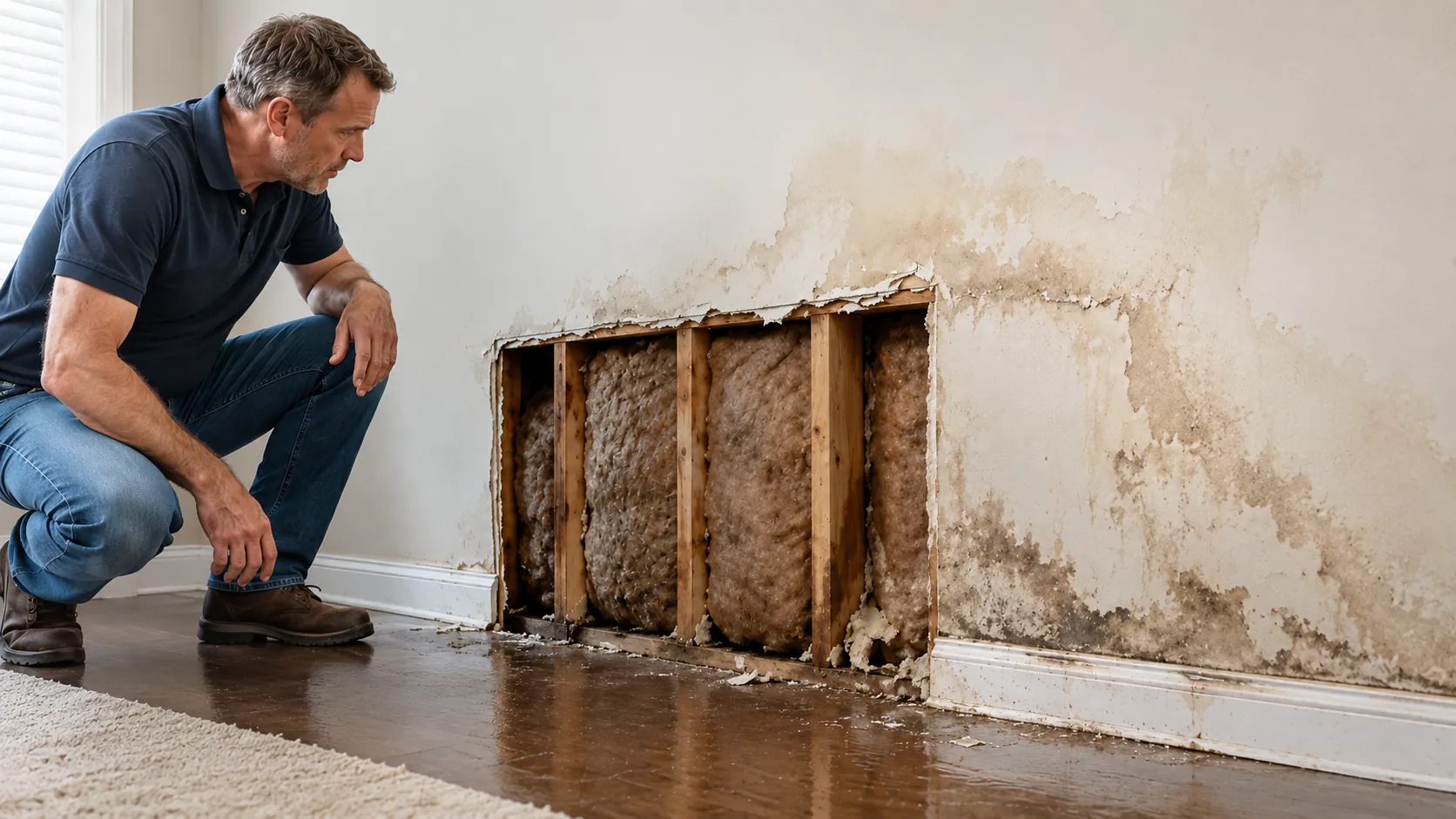
- Rapidly growing stain, crumbling material, visible mold or persistent odor: The visible finish may conceal wet insulation, framing or other cavities. Surface appearance alone cannot determine whether materials are safe or dry.
See EPA's hidden-moisture guidance for why concealed building assemblies need special assessment. Its commercial-building examples are educational rather than a universal residential construction rule.
Separate source repair, structural drying and finish repair
Even if a plumber or roofer stops the source, that does not automatically dry insulation, ceiling board, light-fixture cavities or framing. A useful provider plan should distinguish fixing entry, assessing moisture and damaged materials, drying or removal, and reconstruction.
Ask how the provider will evaluate the cavity, whether insulation was wet, whether drywall remains sound and what evidence supports returning power or closing a ceiling. EPA's water-damaged materials guidance describes conditional drying of intact wallboard and different treatment of absorbent ceiling tiles. Read the wet drywall guide for material-condition questions rather than assuming every stain requires demolition.
Keep a record before the stain gets painted over
From a safe position, record the first date noticed, any recent rain or water use, the approximate stain boundary, visible dripping and whether the shape changed. Keep photos from the same angle on different days, any plumber/roofer notes, affected belongings and mitigation receipts.
The RHH incident and photo log can organize dates and filenames locally. Keep insurer communication separate from contractor findings; the water damage insurance guide explains why sudden discharge, repeated leaks and storm-related intrusion may have different policy implications. Neither a stain nor a repair quote proves coverage.
Frequently asked ceiling-leak questions
Should I poke a bulging ceiling to drain the water?
No. A bulging ceiling may be structurally weakened, and wiring or contaminated materials may be involved. Keep people out of the area and have a qualified professional evaluate stabilization and safe water removal.
Why does the ceiling leak only when it rains?
Timing makes exterior intrusion a possibility, but it does not identify the exact opening. Roof coverings, flashing and other pathways need inspection; the water may travel far from where it enters.
Can I just repaint after the drip stops?
Not until the source and hidden dampness have been assessed. Painting can conceal unresolved moisture; ask what confirms the cavity and ceiling materials are dry and structurally sound.
Does the whole ceiling have to come out?
There is no universal rule. Contamination, sagging, seam damage, wet insulation, mold and inability to access and dry hidden materials make removal more likely. Intact board after a limited verified clean-water leak may be evaluated differently.
Is an upstairs bathroom leak a roof restoration job?
Not necessarily. Plumbing-source repair and water-damage drying are different work stages; a roof contractor may not be appropriate for an indoor fixture leak. Document the observed pattern and ask providers to identify their scopes clearly.
FEMA: Safe Return After Damage · EPA: Material Cleanup Guidance · EPA: Hidden Mold and Moisture · CDC: Electrical/Flood Safety
Reviewed November 22, 2026. These are general homeowner decision questions, not a structural inspection, electrical certification, diagnosis of a leak or policy coverage decision.
Still unsure where the water came from?
Use the safety-first action planner, and request qualified help if electricity, structure or contamination is uncertain.