
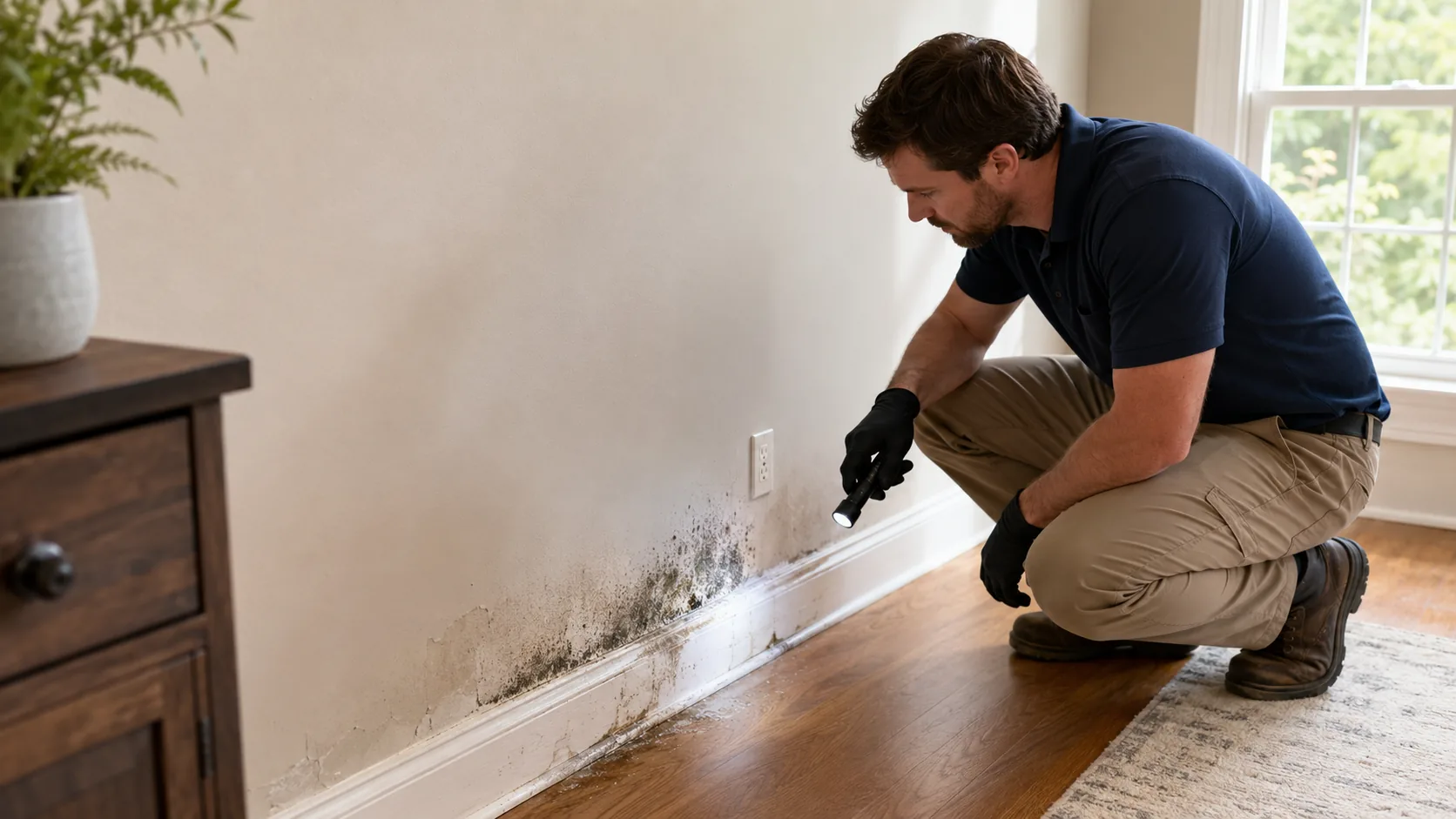
EPA advises against running an HVAC system known or suspected to be contaminated with mold until the concern is properly evaluated. Do not spray household chemicals into ducts, dismantle energized equipment or climb into unsafe attic spaces.
A dark mark near an air vent may be dust, condensation staining or something else; appearance alone does not prove that mold fills the duct system. Actual water in insulation, cooling equipment or air ducts is a separate concern because air movement can distribute contaminants. EPA recommends investigation of the moisture source and care before operating a system suspected of significant mold contamination.
Before paying for duct treatment, ask where moisture was found and how the system was inspected. A photo of a vent alone may not show what is happening inside the ducts.
Separate evidence, source and proposed service
Separate evidence of moisture from assumptions about contamination inside ducts.
- Locate the moisture: Ask whether condensation, clogged condensate drainage, roof leaks, wet duct insulation or poor mechanical operation are the likely source. Cleaning without stopping wetness may not last.
- Distinguish visible surfaces: A stain at the register is different from growth verified on internal metal ducts or wet internal insulation. Request photographs and a defined area rather than blanket claims.
- Understand insulation: EPA notes wet or moldy insulated ducts can be difficult to clean effectively. Ask about replacement of affected insulation versus cleaning an accessible hard surface.
- Review duct-cleaning claims: EPA does not recommend routine duct cleaning without reason and warns about biocides/sealants marketed without adequate evidence. Ask why each treatment is needed.
- Check mechanical safety: Potentially contaminated systems can require qualified HVAC and restoration specialists. Do not handle wet electric components or use unapproved sprays inside air-handling equipment.
- Confirm resolution: Request an explanation of corrected condensate/drainage conditions, material treatment and verification methods. A single filter replacement does not prove source control.
What an HVAC or restoration quote should identify
The proposal should describe affected components, photo evidence, why the equipment is considered contaminated, cause repair, removal of wet material, cleaning scope, occupant protections and follow-up. Compare this with EPA's air duct guidance and seek a second qualified opinion if the contractor recommends an expensive whole-house treatment without clear evidence.
Questions about suspected HVAC mold
Are black marks around vents proof of toxic mold?
No. Marks can have several causes. Mold identification and hazard claims require better evidence than color or a marketing description.
Should I run the fan to dry the ductwork?
Not if significant mold contamination is suspected. EPA advises not operating a known or suspected contaminated HVAC system pending assessment.
Can chemical fogging replace source repair?
No. Chemical treatment does not stop condensation, repair leaks or remove all damaged porous material.
Do all air ducts need routine cleaning?
EPA recommends examining whether cleaning is necessary based on evidence; routine cleaning is not a universal requirement.
Can I replace only the air filter?
Filter replacement can be maintenance but does not address persistent wet insulation, drainage faults or hidden damage.
HVAC moisture and mold references
Check the cited sources and applicable local safety requirements before acting.
Published November 22, 2026; text updated November 23, 2026.
If the system has a moisture problem
Before choosing a service, review when mold inspection or testing helps.