
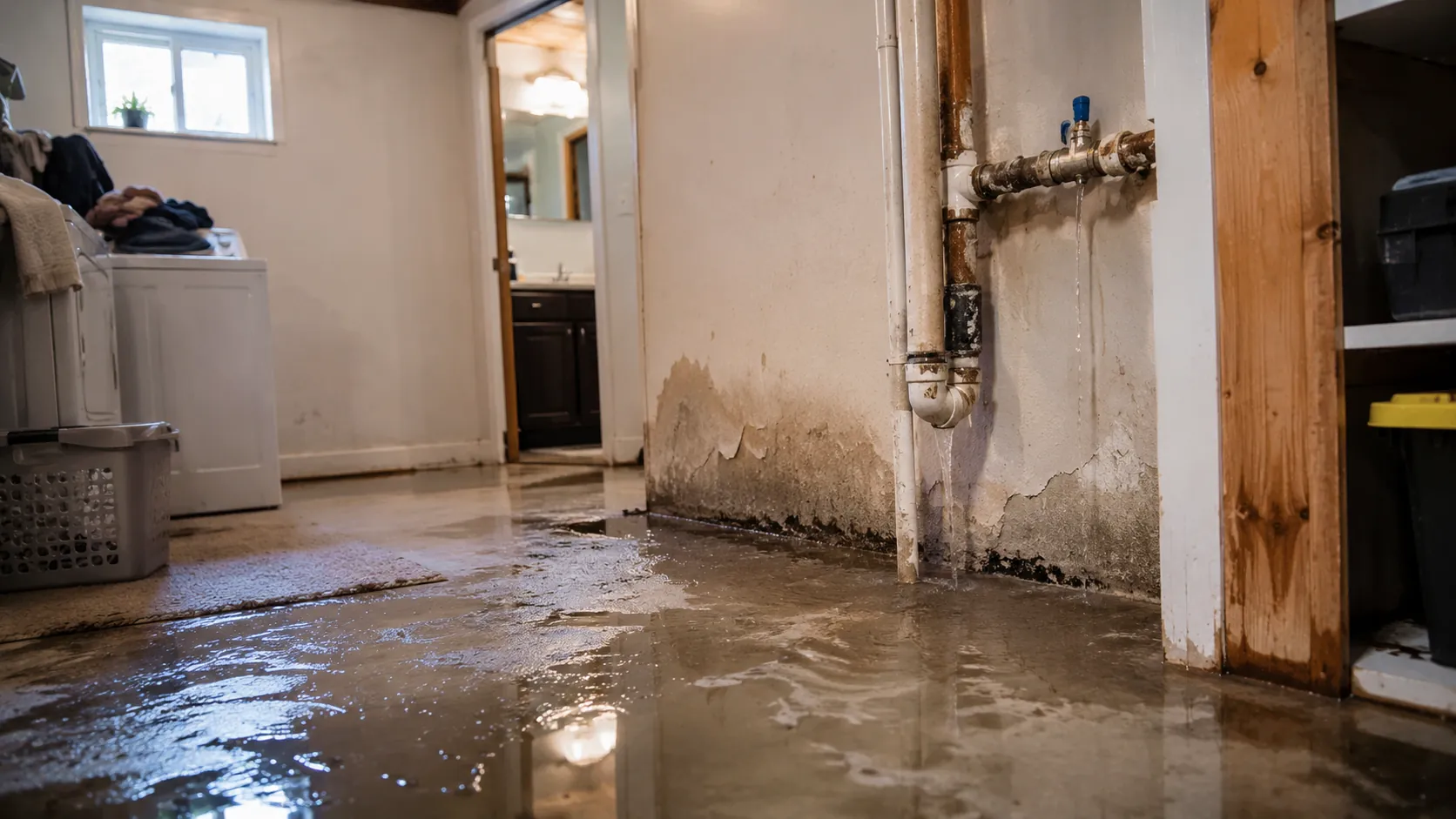
Stop sending wastewater into an apparently blocked drain, keep occupants away from affected areas and avoid contact with sewage. Do not enter standing water near electricity; obtain prompt qualified assistance for active backups.
A single slow sink is not the same as wastewater rising in a basement floor drain while a toilet flushes. When two or more connected fixtures are affected, the issue may extend beyond a local trap or toilet. Sewage contamination, electrical hazards and the condition of the piping make repeated DIY clearing inappropriate.
If wastewater is returning to the home, stop using affected fixtures and keep people away from contaminated areas. Do not approach it as an ordinary sink clog.
Record the pattern before it changes
Record which fixtures back up and when, without entering contaminated areas.
- Multiple fixture involvement: Note which toilet, sink, shower or floor drain backs up and whether using one fixture affects another. Those observations help narrow possible shared piping routes.
- Basement floor drain overflow: A low-level drain may be the first place backup appears. Avoid treating a sewage overflow as clean water or entering a flooded basement to inspect piping.
- Gurgling and slow drainage: Sounds and slow drainage can be useful clues, but they do not establish a broken sewer main. Avoid a definitive diagnosis without qualified inspection.
- Backups after rain: Heavy rain can coincide with a variety of sewer or drainage failures. Record timing and contact the responsible provider or utility where a public connection may be involved.
- Recurring clearing failures: Repeated blockage may warrant inspection for pipe condition, foreign objects, roots or misalignment. Ask why a proposed camera or excavation is needed.
- Wet building materials: If wastewater reaches carpet, cabinets, drywall or insulation, cleanup requirements differ from a clean-water leak. Document damage safely and clarify who handles containment and restoration.
Compare drain-clearing and sewer-repair scopes
Ask what was actually observed, what line or cleanout will be accessed, whether a camera finding is available, what the provider charges if clearing is unsuccessful and whether cleanup or reconstruction is included. A video image may help explain a repair, but the diagnosis and estimate should still be documented.
Questions about sewer backups
Does toilet gurgling prove the sewer line is broken?
No. It is a clue that warrants context and possibly inspection, not a conclusive structural diagnosis.
Can I use another drain cleaner during a backup?
Do not mix chemicals or introduce products into wastewater when the source or existing contents are unknown.
Will snaking always fix sewer backups?
No. Mechanical clearing may not resolve damaged or obstructed piping that needs repair.
Is sewage water safe once it looks clear?
Appearance does not make wastewater sanitary. Follow appropriate contaminated-water precautions.
Does homeowners insurance cover sewer backup?
Not automatically. Some policies require a specific endorsement and coverage depends on facts and terms.
Sewer backup and sanitation references
Check the cited sources and applicable local safety requirements before acting.
Published November 22, 2026; text updated November 23, 2026.
If a drain keeps backing up
If a toilet overflows, follow the specific safety and cleanup steps.