
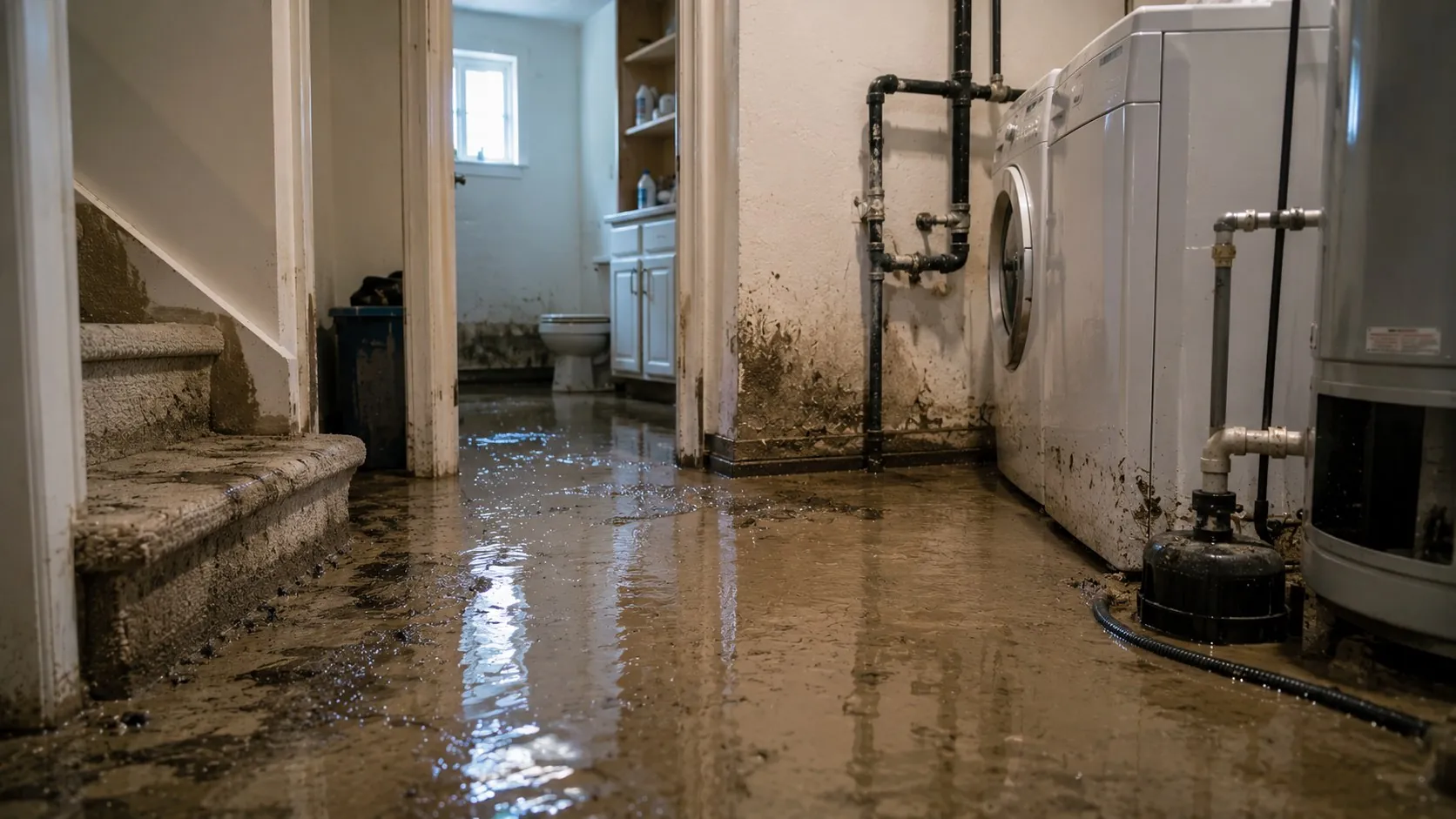
Overflow may include human waste, and wet electrical outlets or basement flooding can create additional hazards. Do not stand in sewage-affected water to reach a valve or electrical panel. Seek qualified plumbing/cleanup help if safety is uncertain.
A toilet that will not drain may have a blockage at the fixture, but repeated overflow or backup at other drains may indicate a broader drain or sewer problem. The safest first move is to stop sending more water into the system—not repeatedly test it with more flushes.
If you know the fixture's shutoff valve and can access it safely without contact with hazardous water or electricity, limiting additional clean supply water may prevent more overflow. If multiple fixtures are backing up or sewage is present, professional assessment is more appropriate than experimenting with household chemicals.
Control the situation without spreading wastewater
Keep the affected bathroom out of use until the cause has been evaluated. Do not flush again just to check whether the water level will fall. Avoid using connected fixtures if they seem to be contributing to a shared drain blockage. When accessible and safe, identify the local water shutoff; in a more extensive event, a plumber or utility can advise on shutting down the appropriate water supply.
Photograph affected areas only from a safe location. If water reaches floors, baseboards or porous materials, contaminated cleanup rules may apply. CDC advises avoiding potentially sewage-contaminated floodwater. See CDC wastewater safety guidance and the RHH sewage cleanup page.
Single clogged toilet or a wider drain problem?
- Only one toilet affected: A fixture-level blockage is possible. Ask about safe clearing methods and whether anything unsuitable for the drain was flushed. Do not assume a basic plunger will solve an obstruction beyond the fixture.
- Multiple toilets, tubs or floor drains rising: The shared drain/sewer line may be involved. Stop using connected plumbing and ask for prompt qualified diagnosis rather than repeating DIY attempts.
- Water comes up elsewhere when a toilet flushes: Record which fixture changes and when. That observation can help a plumber determine whether the issue is local or downstream.
- Repeated clogging after temporary clearing: Ask about pipe condition, venting or a downstream obstruction instead of treating every recurrence as a disposable-wipes or paper issue.
- Sewage or contaminated overflow: Do not pour other cleaners into the water to make it disappear. Avoid contact and request appropriate cleanup if porous floors or walls were affected.
This checklist is not a drain diagnosis. A plumber may need a physical inspection to determine the blockage location, whether pipe repair is needed and what equipment is appropriate.
Separate plumbing work from contaminated-material cleanup
Once the drain problem is corrected, the wet area may still require cleaning, drying and replacement assessment. A bathroom rug, cabinet kickboard or nearby flooring may absorb wastewater even when the toilet itself now flushes. Ask what surfaces can be safely cleaned and what porous items should be evaluated for removal.
Keep invoices and a log of water damage, plumber findings and cleanup activities. RHH's local damage log is an organizational aid, not an insurance claim. For larger overflow events, see material-specific flooring questions.
Do not mix cleaning chemicals, and follow product labels if professional guidance permits homeowner cleaning. If the water source is unknown or contamination significant, DIY cleaning may not be suitable.
Clogged toilet and overflow questions
Should I keep flushing to push the clog through?
No. Repeated flushing can add water to an already blocked fixture and increase the chance of overflow.
Can dish soap and hot water fix every toilet blockage?
No. An obstruction may be hard, deep, or part of a shared drain problem. Uncontrolled hot water or chemical mixtures can create further damage or hazards; obtain an appropriate diagnosis.
Why does my bathtub gurgle when the toilet flushes?
Changes in connected fixtures may suggest a shared drain or ventilation issue; the exact cause requires plumbing assessment.
Is every toilet overflow considered sewage damage?
Exposure to wastewater or human waste requires precautions. The exact contamination and affected materials depend on the event; do not classify a spill as sanitary based on appearance alone.
Who handles wet flooring after the plumber clears the pipe?
The plumber may fix the blockage, while separate water-damage restoration work addresses affected materials and drying. Confirm what each written scope includes.
CDC: Wastewater safety · EPA: contaminated water cleanup · CDC: cleaning and disinfecting. Reviewed November 22, 2026. General educational guidance, not a diagnosis of a drain system or guarantee of cleanup safety.
Related homeowner questions: shared sewer line backup signs · drain clearing versus professional plumbing. These pages cover distinct evidence, safety or provider-scope decisions.
Is wastewater spreading beyond the bathroom?
Review contamination precautions and seek qualified cleanup assistance as needed.