
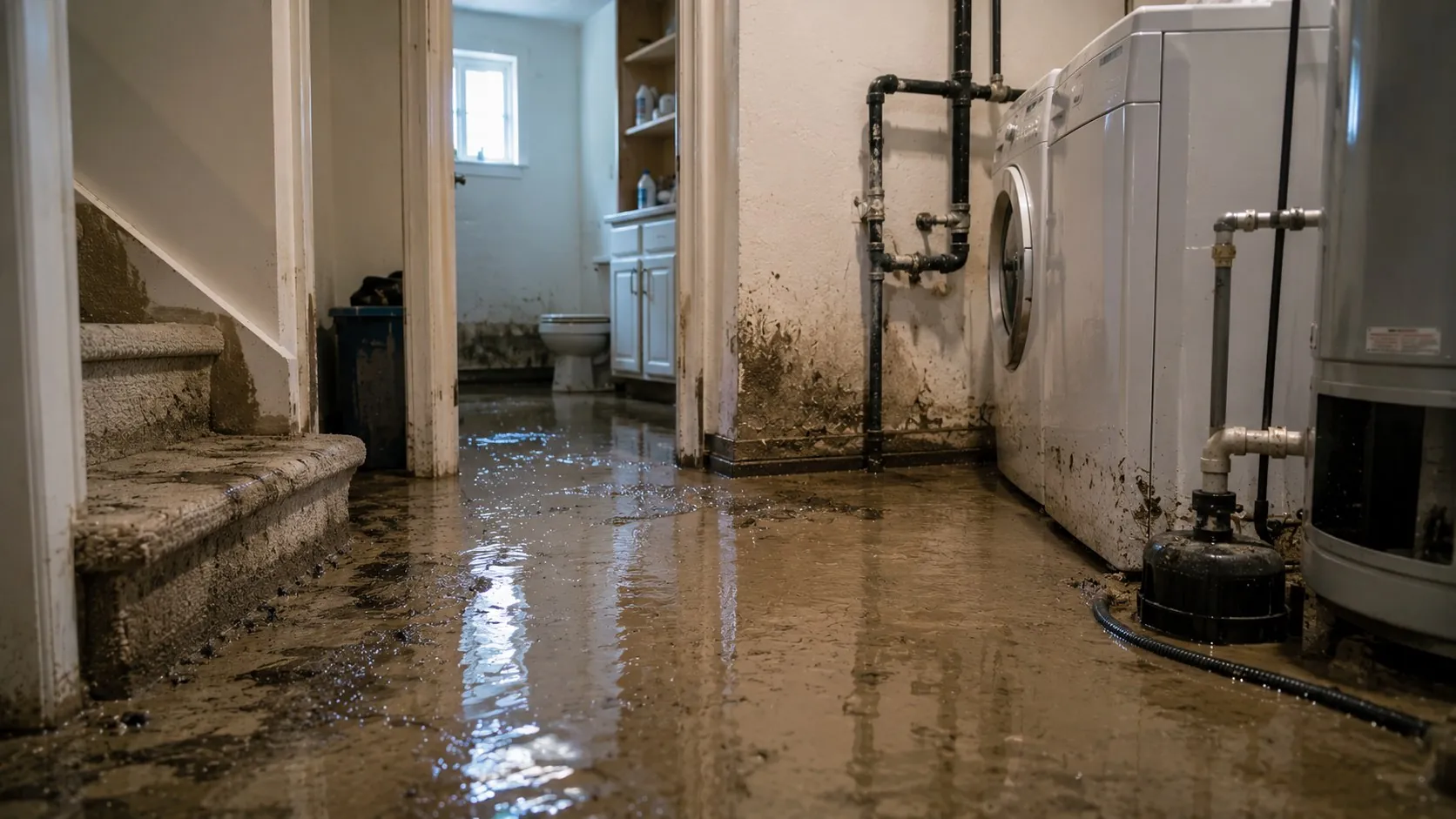
Keep children and pets out. Do not enter standing water where electrical hazards, structural hazards or significant contamination may be present.
Why sewage is different
Sewage-contaminated water can contain harmful microorganisms. Porous materials can absorb contamination, and simply making a surface look dry does not necessarily make it sanitary.
Keep the area isolated
Limit foot traffic and avoid carrying contaminated items through clean areas unnecessarily. Do not let children or pets enter the affected space.
Do not create extra exposure
Avoid splashing, aggressive sweeping or using equipment in a way that could spread contaminated material. If electrical equipment is involved, do not enter an unsafe area to unplug it.
Document from a safe position
Photograph the affected rooms, visible water line, damaged belongings and apparent source when you can do so without entering a hazardous area.
Separate cleanup from cosmetic repair
Cleaning and removing contaminated materials comes before repainting, replacing trim or covering damaged surfaces. Hidden contamination and moisture should not simply be sealed in.
Consider professional assistance when contamination is widespread, porous building materials are affected, HVAC components may be involved, the source cannot be controlled safely, or you are unsure whether the space can be cleaned without exposing occupants.
Did the wastewater start at a toilet? The toilet overflow and drain-backup guide explains immediate precautions and clues that may suggest a shared drain problem.
Related homeowner questions: sewer line backup warning signs. These pages cover distinct evidence, safety or provider-scope decisions.
Not sure what to do after the immediate hazard?
Use the first-step recovery checklist to organize documentation, drying and the decisions that follow.