
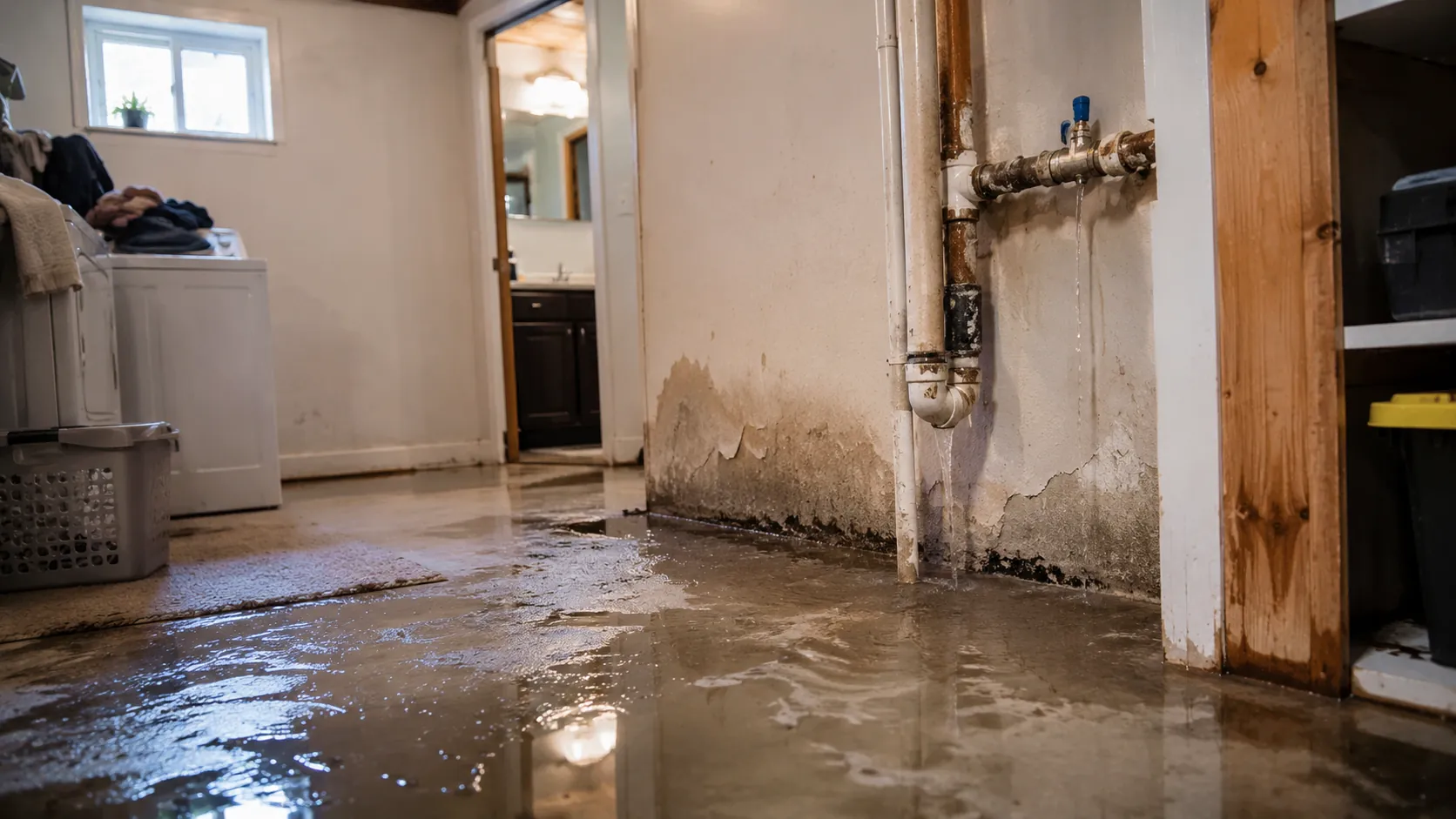
Do not approach electrical equipment from a wet area or handle damaged wiring. If a pipe has split, water is spreading near electrical systems or you cannot reach the valve safely, keep people away and obtain appropriate emergency assistance.
Frozen water in a supply line can block flow and stress a pipe or fitting. A homeowner might notice unusually weak water flow at one fixture during a cold snap, with plumbing in an unheated crawl space, attic, garage or exterior wall. These are clues, not proof of a freeze; other plumbing problems can cause reduced pressure.
The National Weather Service highlights pipes in cold places such as exterior walls, under kitchen cabinets, basements and attics. Its post-freeze safety guidance warns never to use an open flame for thawing.
Look for a pattern, and locate the shutoff before making repairs
Record which fixtures have normal flow and which are affected. If a safe, accessible main water valve or affected fixture valve is known, understand how it operates before water starts leaking. Don't crawl into an unstable or dangerously cold space to search for a pipe.
Be alert when the weather warms. A frozen line may become a visible leak as ice thaws, and water may travel into wall cavities before appearing on a floor. The burst-pipe water damage guide explains shutoff, documentation and concealed-wall warning signs once water has escaped.
Choose the safest response for the situation
- No flow, suspected accessible freeze but no leakage: Avoid a torch or open flame. If local official guidance supports cautious non-flame warming and the location is safe, follow that guidance and appliance safety instructions. Ask a plumber when location, pipe type or electrical safety is uncertain.
- Pipe visibly split or water actively escaping: Shut off the supply only if the valve is accessible without entering water/electrical hazards. Obtain qualified plumbing repair and assess wet building materials separately.
- Water is appearing from a wall or ceiling: Do not cut open finishes solely on a guess; avoid electrical wiring and unstable/wet overhead materials. See the ceiling leakage safety guide.
- Multiple fixtures or the main supply are affected: Stop improvising with heaters or chemicals. The problem can involve inaccessible piping or utility systems; call the appropriate provider.
For seasonal preparation and safe heating principles, read National Weather Service winter preparedness and post-freeze follow-up. Water-system details differ by region and building.
Reduce future freezing risk before the next cold spell
Identify vulnerable plumbing runs along exterior walls or in cold utility areas and ask whether insulation, draft control, safe room heating or plumbing relocation is appropriate. Keep ordinary heating systems maintained and follow local utility or building guidance about cold-weather precautions. Insulation reduces heat loss but is not a guarantee against freezing.
If cabinets conceal pipes along a cold wall, local winter-preparedness guidance may recommend allowing warm indoor air to reach them, provided it can be done safely for children and household occupants. Do not leave unsafe portable heaters running near flammables.
Check whether a leak has already damaged cabinets, flooring or insulation. A plumber stops the water-source failure; a water-damage restorer may still need to evaluate concealed moisture. Use the local photo/incident log to document visible damage and dates for later follow-up.
Frozen pipes: homeowner questions
Can a pipe burst only after the frozen section thaws?
A leak can become visible as thawing restores flow through a damaged pipe or joint. Stay alert for changes around walls and fixtures when temperatures rise.
Is boiling water or a blowtorch a good way to thaw pipes?
Never use an open flame. Excess heat or unsafe electrical methods can cause fire, pipe damage or injury. Follow qualified or local official guidance for the actual pipe and building conditions.
If one faucet still works, is the whole house safe?
Not necessarily. A freeze or leak may affect only one branch or concealed section. Reduced flow alone cannot locate the problem.
Does a plumber automatically dry wet drywall?
No. Fixing the pipe and evaluating wet materials are separate services; ask who is responsible for structural moisture checks and any necessary restoration.
Will homeowners insurance always cover frozen-pipe damage?
No. Coverage varies with policy conditions and facts such as heat maintenance, vacancy, exclusions and the cause of loss. Confirm terms with the insurer rather than assuming coverage.
NWS freezing recovery · NWS winter preparedness · EPA safe cleanup after water intrusion. Reviewed November 22, 2026. Not a plumbing diagnosis, structural inspection or insurance determination.
Related homeowner questions: hidden leak observations before opening walls. These pages cover distinct evidence, safety or provider-scope decisions.
Return before another incident: Prepare the home before the next freeze. Record what changed and review manufacturer or local hazard guidance before repairs.
Already dealing with water escaping from a pipe?
Prioritize safe shutoff and qualified assessment before repairing wet walls and flooring.