
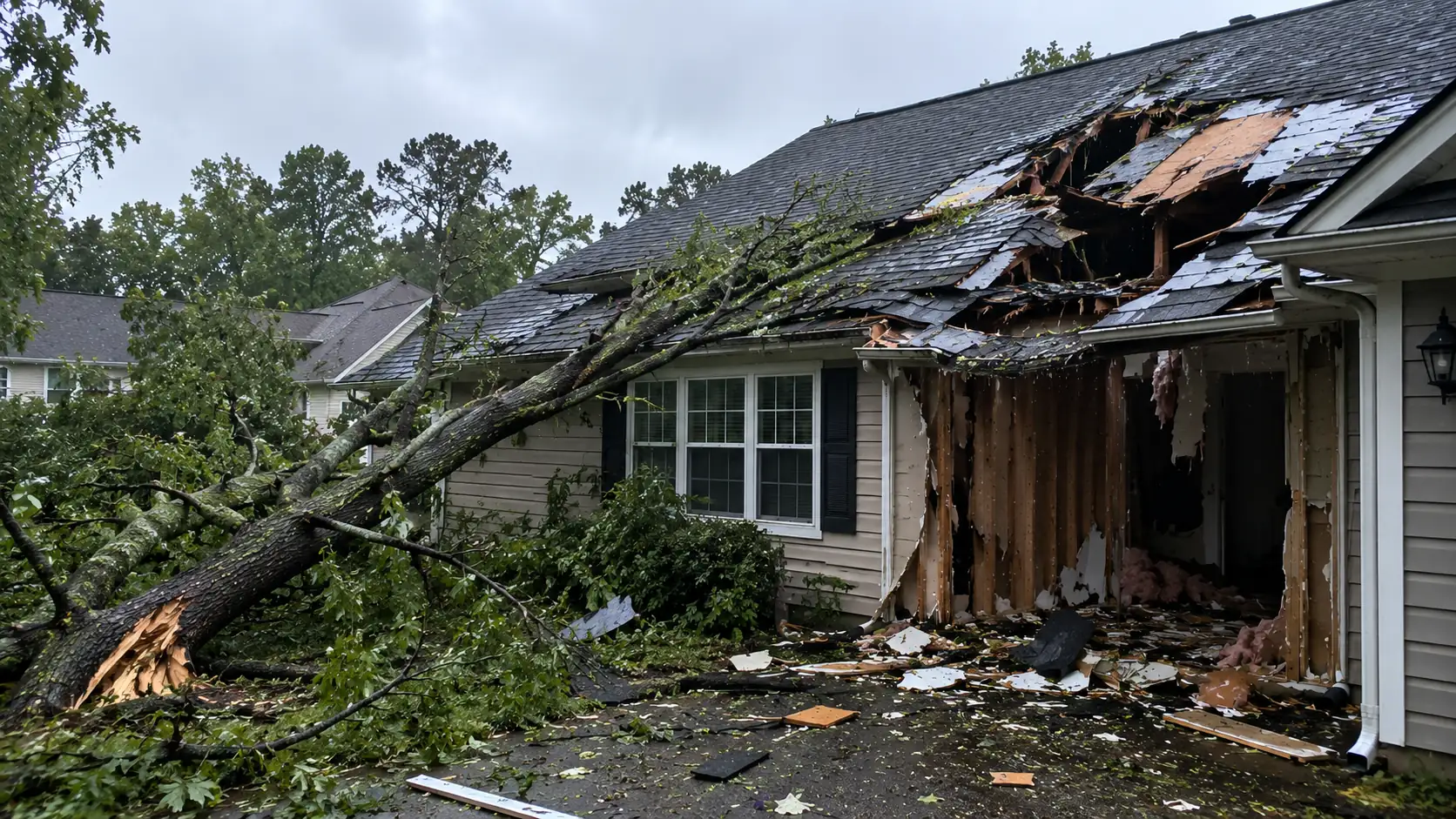
Stay clear of downed electrical lines, visibly unstable ceilings, major structural damage and standing water with possible electrical exposure.
Limit additional rain only when safe
Close intact windows and doors and move undamaged belongings away from active drips. Temporary exterior protection should not require climbing onto an unsafe roof or entering a structurally questionable area.
Create a visual record
Photograph exterior damage from a safe location, interior water paths, ceilings, walls, flooring and affected belongings before major cleanup changes the scene.
Separate wet from dry
When safe, move unaffected belongings away from wet areas and avoid spreading water or debris into rooms that escaped damage.
Think beyond the visible puddle
Storm water can travel through insulation, wall cavities and ceiling assemblies. Surface drying may not address moisture hidden behind finished materials.
Organize the next decisions
Keep notes on when the storm occurred, when water was first noticed, temporary steps taken and conversations with insurers or restoration companies. Ask what areas will be inspected, how drying progress will be verified, and what work is included in any proposed scope.
Stopping rain entry does not automatically dry the building.
Roof or exterior repair addresses where water entered. Restoration work may still be needed when ceilings, insulation, walls or flooring remain wet after the exterior opening is secured.
- Do not climb onto an unsafe or storm-damaged roof.
- Photograph exterior and interior conditions.
- Ask how concealed moisture will be located.
Start with documentation and drying, then compare the proposed repair scope.
Open recovery stepsReview the proposed repair scope and confirm whether interior drying is included.Need help organizing the recovery?
The first-step checklist covers documentation, drying and questions to ask before restoration work begins.