
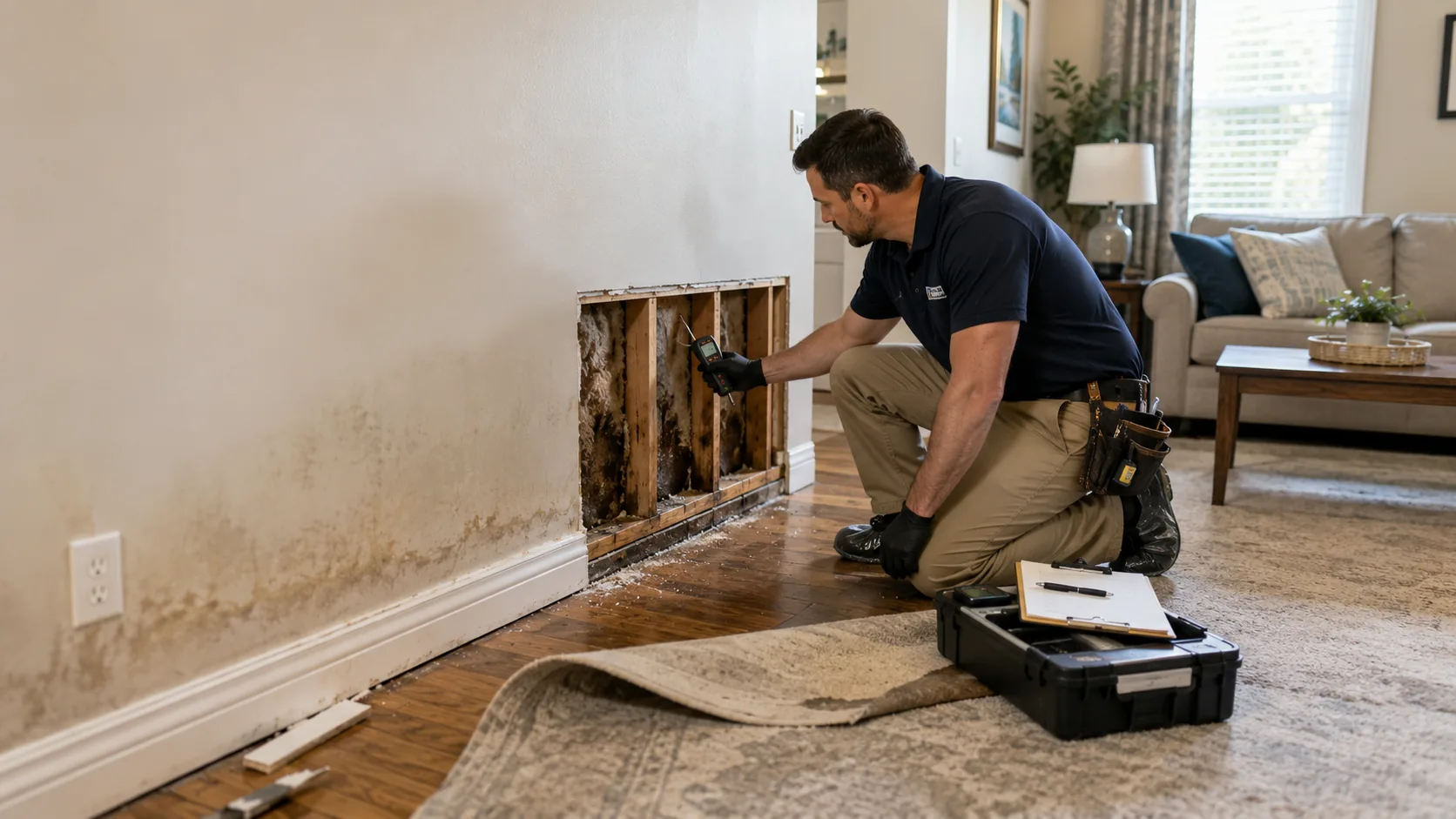
This is an informational aftermath guide. It is for homeowners deciding what to do after discovering water damage. It does not replace emergency services, a professional inspection, insurance guidance or a contractor’s site-specific assessment.
If water is touching electrical equipment, sewage is involved, the structure appears unstable, there is a gas or fire hazard, or anyone may be in immediate danger, leave the affected area. Use the water emergency guidance and contact the appropriate emergency service when needed.
Limit additional water only when it is safe
If the source is obvious and can be stopped without entering an unsafe area, shut off the relevant fixture or household water supply. Do not enter standing water near electrical equipment or take risks to reach a valve.
If an active plumbing leak is still feeding the damage, the plumbing and burst-pipe service path may fit before restoration work begins.
Document what happened before major cleanup
When it is safe, take clear photos or video of affected rooms, visible water lines, damaged materials and the apparent source. Note when you first discovered the problem and which areas were affected.
Keep useful records of emergency work, estimates, invoices and communications. If insurance may be involved, ask your insurer what documentation it wants before discarding damaged materials unless health or safety requires immediate removal.
Judge whether the problem is bigger than surface cleanup
A small spill on a nonporous surface is different from water that has reached drywall, insulation, cabinets, subflooring, multiple rooms or concealed cavities. Materials can look dry at the surface while moisture remains inside assemblies.
Professional water-damage restoration may be worth considering when water has spread beyond a small controllable area, standing water needs extraction, structural materials are wet, contamination is possible, or you cannot confidently locate and dry the affected materials.
For service-specific information, use the dedicated Water Damage Restoration page. It covers extraction, structural drying, mitigation and restoration-service decisions while this guide stays focused on what to do after discovering damage.
Pay attention to moisture that remains or returns
Persistent moisture can create conditions where mold becomes a separate concern. Visible or recurring mold, musty conditions tied to a moisture problem, affected porous materials or suspected concealed growth may justify a mold-specific assessment.
Read the mold after water damage guide for educational context. If you are already looking for professional removal or remediation help, use the dedicated Mold Removal page.
You do not need to diagnose the building yourself. Be ready to describe the apparent source, when the loss was discovered, affected rooms and materials, whether water is still entering, contamination concerns and any photos you safely collected. Ask how moisture will be measured, how the work scope is documented and how additional work is approved if hidden damage is found.
Use the dedicated service page that matches the current problem.
This guide stays focused on aftermath decisions. The dedicated service pages provide the service details and contact options for water restoration and mold removal.
- Water still needs extraction, drying or restoration: continue to Water Damage Restoration.
- Mold is now the main concern: continue to Mold Removal.
- You only need a concise first-hour checklist: continue to Water Damage First Steps.
If water damage or mold is the problem you need help with, you can also call using the service option that best matches your situation.